As a longtime fan of dystopian science fiction like The Matrix and Metal Gear Solid, I’ve always found AI to be a compelling, if somewhat unsettling, concept. That’s why, despite those cautionary tales, AI is consistently surprising me as a force for good.
Whether it’s generative AI being used to enhance medical research or computer vision helping athletes track and analyse their performance, I currently spend a lot of time writing about how AI can help people work smarter, and more safely and efficiently.
While it’s all fascinating to learn about, for me, here’s one application that resonates much more than the others. It may not seem like the most obvious use case, but AI is already playing a key role in humanity’s efforts to improve animal welfare – and the more I learn, the more it makes sense.
In this blog, I’ll look at three ways AI is helping make life a little better, if not more dignified, for wildlife and livestock. But before we dive in…
A quick guide to the tech
Were you confidently nodding along when I mentioned generative AI and computer vision? If those terms make sense to you, feel free skip to this section. If not, then read on.
Generative AI refers to models that can learn from existing content – like the collected works of William Gibson, or the films of Ridley Scott – to create new text, images, video, and synthetic data.
Computer vision (CV) is a field of AI in which algorithms are continuously trained using visual data to recognise objects and people. This helps it spot and respond to pre-defined patterns and behaviours.
Eager to learn more about AI? Be sure to read my colleague George’s blog about synthetic data, and Katy’s deep dive into AI’s applications in healthcare.
Use case #1: Protecting British wildlife on Network Rail
Network Rail (NR) and the Zoological Society of London (ZSL) – a science-driven conservation charity – are working with Google Cloud to identify, monitor, and learn more about wildlife living in and around the 52,000 hectares of land owned by NR.
Together, ZSL’s Machine Learning (ML) image processing systems and Google Cloud’s advanced data analytics enable NR’s ecologists to rapidly survey wildlife, map their behavioural trends and take protective action at scale.
Connected sensors capture huge amounts of audio and visual information in key wildlife areas. AI tools are then used to analyse the data and inform decisions regarding how to best protect different species.
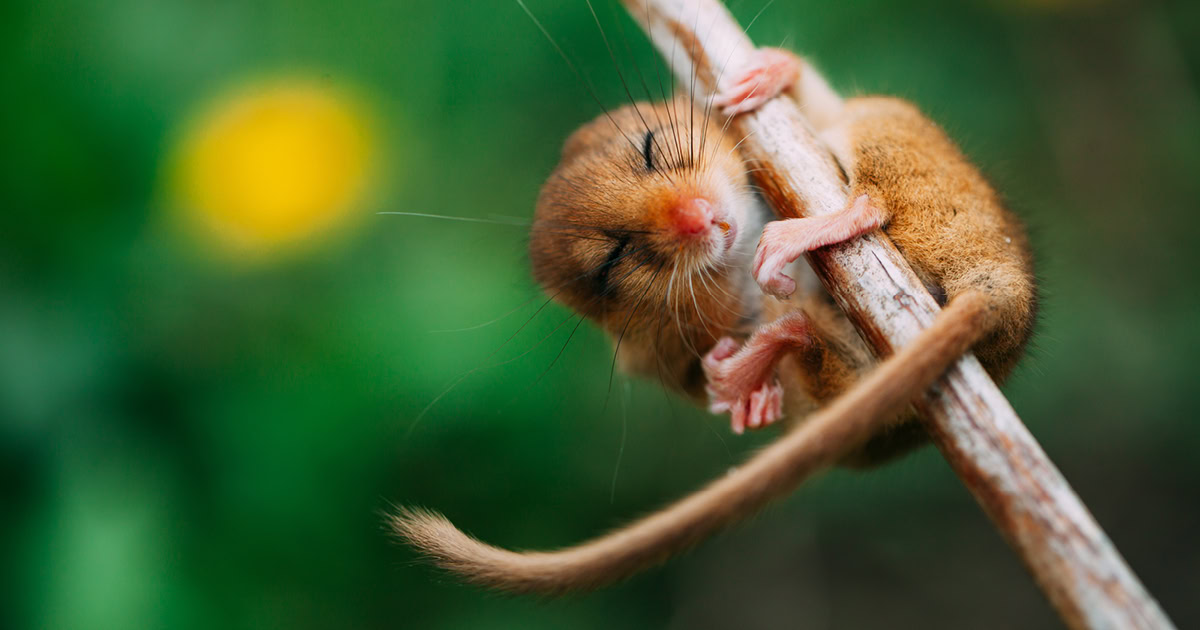
So far, the initiative has helped track and protect endangered hazel dormice living along the edge of railways in the south of England, and many bat and bird species in and around London – including the rather lovely Eurasian blackcap. It’s also helped NR identify the best places to create “hedgehog highways” on its lines, helping the spiky lads cross over safely.
As climate change drives many species to find new habitats, ZSL and NR plan to use AI to monitor and safeguard their migration without disrupting railway operations. The project’s conservationists also expect AI will soon help them better manage vegetation alongside railways and on road verges to encourage biodiversity.
It’s nice to see organisations working together to protect these creatures, and it’s sure to help boost NR’s reputation with some passengers and investors. You can learn more about the initiative here.
Use Case #2: Observing livestock welfare for healthy herds
The National Farmers’ Union says animal welfare is a high priority for all British farmers, and while there are many RSPCA-assured farms, less than 3% of UK farms are inspected by official Government bodies each year.
There are also more than 1,000 “US-style mega-farms” in the UK, and they can become extremely crowded. These are the most likely candidates for animal mistreatment, given the aggressive turnaround on production and limited space.
It’s often difficult for vets, cattle consultants, and farm advisors to tell what’s happening behind closed doors. Plus, even with the best intentions, farmers may struggle to keep manual track of every animal’s wellbeing.
This is where computer vision and AI-powered analytics can help. Automatic image detection and analysis solutions can provide remote, AI-enhanced livestock surveillance 24/7 – to everyone who needs it.
Non-intrusive cameras are installed in strategic farming areas, providing a live video feed augmented with on-screen visuals that indicate each animal’s current status, behaviour, and risk level.
Machine learning algorithms continually monitor and analyse the footage, including user responses, to more accurately identify when an animal is at risk or action must be taken to optimise their environment. To achieve this, the AI is taught to recognise and assess the environment’s brightness and humidity, and even animals’ faces and vocalisations.
Users can pre-define scenarios that they want the AI to alert them to, such as abnormal animal activity, whether cows are lying down enough, if their stalls are comfortable, and when food or water is running low.
AI-powered monitoring solutions can also help farmers and vets identify sick animals, predict emerging health issues, and analyse behavioural patterns that are indicative of an animal’s wellbeing. This information can improve farming productivity too, ensuring animals are kept in conditions conducive to safe and efficient pasture and growth.
Use case #3: Reducing avoidable animal suffering in slaughterhouses
Animal welfare organisations The Dutch Society for the Protection of Animals and Eyes on Animals, meat producer Vion, and professional services giant Deloitte have teamed up to develop AI4Animals – an intelligent animal surveillance system.
Their mission is to “significantly reduce avoidable and unnecessary animal suffering through innovative technology”. The solution uses AI to continuously monitor how animals are being handled in slaughterhouses, and alert those in charge of animal welfare to any signs of mistreatment or deviation from regulated protocol.
AI4Animals says many major slaughterhouses lack the time and resources to assess footage captured by traditional camera monitoring solutions. With AI, every frame is analysed in real-time using a rules-based criteria to detect handling issues, such as:
- People causing stress by walking directly against the direction of the pigs
- Animals remaining idle due to possible exhaustion or injury
- Inappropriate use of mobile stunners as defined by regulatory protocol
There are other issues it can detect, but they turn my stomach – so I’ll leave those out for both of our sakes. Should the AI detect an issue, users can manually review any flagged footage to confirm mistreatment or a false positive. The AI will also compile regular reports to help outline deviations in behaviour over time, and inform decisions at a more strategic level.
Will this technology catch on?
During my research for this blog, I came across an article exploring the use of AI to detect distress in pigs. It’s already able to do this with 92% accuracy compared to human assessment.
While it’s true that happy animals tend to be more productive, and calmer animals are easier to handle, it’s questionable whether all producers of animal products are ready to embrace such technologies. By monitoring the emotions of livestock, you also acknowledge their existence and importance. Some industry commentators believe producers will resist this shift, fearing the imposition of new regulations that diminish the profitability of their operations.
It’s grim to think that people may ignore such promising technology because it risks humanising animals and harming profits, and I can only hope it does inspire more meaningful change across the industry.
In the meantime, the solutions explored in this blog are already driving meaningful change, and while I may not like industrial farming, if AI can help the animals live out happier, more dignified lives – I’m all for it.
