
If you’re looking for the very best examples of B2B marketing content, you’ve come to the right place. Because – after a whirlwind of nominations, shortlisting, group stages, and voting – we’ve whittled them down. Nineteen contenders. Five finalists.
And, ultimately, one winner.
In a departure from our usual format, this B2BQ&A tries to ask a question posed by our host: “Just what is the best B2B content of all time?”
Along the way, we find plenty of B2B inspiration, cast an eye over audiences’ changing content preferences, and hear from expert judges like Andrea Clatworthy, Robyn Collinge, Irene Triendl, Doug Kessler, Katie Colbourne, and Rishi Dastidar… as well as our co-host for this episode, Rockee.io founder (and recently revealed sausage enthusiast) Matt Laybourn.
After about 80 episodes, it’s also our final podcast hosted by Radix Creative Director David McGuire, who’s leaving us to embark on a new adventure. (There’s plenty more B2BQ&A to come, though, courtesy of our new-look hosting team. Wait and see!)
You’ll find a full transcript of this episode at the end of this post… just keep scrolling.
So what can we learn from the best 19 examples of B2B content?
You can find the full list of nominees right here. And, reviewing the vote, here’s what we discovered:
1. In the end, great content wins
Yes, AI-driven filler is making search engine results a bit unreliable lately. But when audiences do find content with true value, they’re all the more likely to appreciate it.
As Matt says: “As much as there’s a there’s a shift in the landscape with Google search results, people will find and gravitate towards really good content… like: I found this awesome thing, and I want to share it with you.”
2. All content needs to earn the audience’s time
Judging the podcast category, Irene says: “There is actually something quite arrogant in assuming people are going to want to listen to you and your guests talk on and on for an hour, or however long the podcast is. So if you do that, I think you owe it to your audience to have something interesting to say and to be really well prepared. And that you’re offering them something that they can’t get elsewhere faster or better. And this is ultimately true for all content, really. People’s time is precious, and you can’t take it for granted that they are going to give it to you.”
Gulp. We’re doing our best, Irene. Honest.
3. Authenticity wins loyalty
The high number of podcasts among the nominees is testament to the rise of community marketing, and the power of getting people to identify with your content.
Matt puts this down to authenticity, saying: “People want to hear a natural conversation, not someone kind of regurgitating, I don’t know, frameworks or the best practice. It’s got to be an authentic thing.”
4. A little wit can even the odds
No spoilers, but among famous players like Adobe Marketing Cloud, GE, and Volvo Trucks, smaller names can really hold their own – all they need is a fresh, witty way to express themselves. Whether it’s a financial blog about Chicken McNuggets, a rhyming explainer video, or – yes – a dating app for cows, content is a realm where a bright idea can carry the day.
Speaking about Iron Mountain’s entry, Rishi says: “Wit and whimsy are rarely used tools in this world. On this evidence, one wonders why.”
Want to skip to the exciting bits? Here’s where you can find them…
4:22 – Best B2B Blog Post
8:52 – Best B2B Podcast
13:20 – Best B2B Long-Form Content
17:20 – Best B2B Video Ads
20:25 – Best Wildcard Content
24:21 – Grand Final: The Best B2B Content of All Time
Next time, if could be your question we’re answering
If you have a question about B2B content writing, we absolutely want to hear it. Send us a voice memo at [email protected].
And if there are any other thoughts you’d like to share (or if you’d just like to say hello to the podcast’s new hosts), you can connect with us on LinkedIn and Twitter: @radixcom.
How to listen:
- You can download the episode here (right-click and select “Save As”).
- Or you can subscribe to the podcast on Apple Podcasts.
- Alternatively, add our RSS to your preferred podcast player.
Credits and thanks
- Thanks, Matt Laybourn, for judging and co-hosting so expertly.
- Indeed, we’re incredibly grateful to all our judges: Andrea Clatworthy, Robyn Collinge, Doug Kessler, Irene Triendl, Maureen Blandford, Jason Miller, Joel Harrison, Katie Colbourne, and Rishi Dastidar.
- Thanks also to everyone who nominated, and everyone who voted. Without you, none of this happens.
- Podcast editing and music by Bang and Smash.
Finally, David has a massive list of goodbye-and-thanks: everyone he’s interviewed or co-hosted with, everyone who’s listened, and everyone who’s sent us a copywriting pro-tip. Thanks to Gareth at Bang and Smash for sound editing heroics, and Hannah Beech for super podcast branding. And especially thanks to Emily King and Fiona Campbell-Howes for birthing this podcast and passing it on. Thank you.
OK. You know we promised you that transcript…?
Transcript: B2BQ&A 113 – What is the best B2B content of all time?
David McGuire: What is the best example of B2B content, ever?
Matt Laybourn: That’s a great question. Let’s ask the very best 10 B2B judges that we can find – and the voting public – to find out.
David: Hello, Listener, and welcome to B2BQ&A, the podcast where we go in search of an answer to your question about B2B content writing.
This is episode 113. And as this year marks the 10th anniversary of our podcast, we’re taking the very unusual step of trying to answer a question from me: “Just what is the best bit of B2B content, ever?”
To help me I’m joined by one of the judges from our expert panel. From rockee.io and the Sausage Factory podcast. It’s Matt Laybourn. Matt, hi! Welcome.
Matt: Thank you so much. It’s a pleasure to be here.
David: The Sausage Factory, I’ve got to ask you about that. That’s a new podcast, right? Love the name. Are you just talking about sausages a lot?
Matt: (Laughs) Yeah, so the reason behind it being called the Sausage Factory is because our perception – at least me and my co-host Mark Willis – our perception is we’re in a cycle of endlessly making content at the moment and not worrying about the quality of it. You know, the rise of AI and all of that type of stuff. So things have become a bit of a sausage factory. But the interesting side addition that I didn’t expect for this, is we now have this weird Venn Diagram of B2B marketers and sausage enthusiasts. And it’s kind of this little interesting crossover
David: That Venn diagram is a circle?
Matt: Yeah, you’d think so, but there’s been some discerning comments about certain types of sausages, which, again, is not something we expected to talk about on the pod.
David: Well, you’re very well qualified then if it’s a podcast about content that stands out from the run-of-the-mill because that’s what we’re trying to get to the bottom of today.
Before we go any further, I should probably introduce myself, shouldn’t I? My name’s David McGuire. I’m Creative Director at Radix Communications, which is the B2B tech writing agency. And the reason I get to take the self-indulgent step of posing my own question for this B2BQ&A is that after eight years, this is my last time in the host’s chair of this podcast.
Don’t worry, I’m handing over to a fabulous rotating roster of hosts: George, Katy, Steve, and if you’re very lucky, Kieran. And we have many more brilliant episodes in the pipeline for you. So don’t worry, there is more B2BQ&A to come, just not with me.
So if you do have any comments or suggestions, or you’d just like to welcome the new hosts, you can find Radix on LinkedIn or Twitter.
Announcer: @radixcom.
David: And if you want the show to answer your question on a future episode, record a quick voice note and send it by email.
Announcer: [email protected].
David: Right. That’s enough prevarication. Let’s get on with the serious business of finding the best B2B content of all time.
First, I should start by saying thank you to everybody who put forward their favorite examples of B2B content. We took all of your nominations, and we put them in front of a brilliant panel of 10 B2B marketing experts, as well as senior Radix writers, who helped us to create five category shortlists: best blog, podcast, long-form content, video ad, and a wildcard category for entries that kind of defied description.
We had a public vote, and the winner of each category went forward to the Grand Final, the voting for which closed just a few minutes ago. And in a few moments, we’ll reveal who won. Matt, are you ready?
Matt: I am very ready. I’m very excited. Let’s do this.
David: You sure?
Matt: Yeah. Come on let’s go.
David: Okay, let’s go.
Voiceover: Best B2B Blog Post.
David: Blogs are such a staple of B2B content marketing, it’s no surprise we’ve got lots of strong contenders here. So thanks to Andrea Clatworthy at Fujitsu and Robyn Collinge of WeTransfer who helped our Head of Copy, Matt, and Senior Copywriter George compile the shortlist.
Now, they very particularly enjoyed Beam’s How to Write a B2B Blog Intro that isn’t Boring AF and Hank Barnes of Gartner’s The Tyranny of More, but ultimately the four they selected were as follows:
- Andy Raskin’s The Greatest Sales Deck I’ve Ever Seen,
- Assure Hedge’s The Chicken McNuggets’ secret ingredient is not what you think…,
- Tom Roach on The Wrong and the Short of It,
- and Velocity Partners’ A Stakeholder Through the Heart.
So Matt, having been writing blogs for a while it feels to me like they’ve changed in nature a lot over the last few years in B2B; that they’ve become more of a mainstay of the content strategy where once they might have been SEO filler, I guess. Is that something that you kind of recognise? Why do you think it might be?
Matt: Yes, it’s an interesting mix at the moment, because you know, things like programmatic AI are starting to kind of make the pendulum swing the other way a little bit again, because we’re getting this kind of overpopulation of essentially facts-based articles. They don’t have editorial quality to them, they’re just telling the reader what they probably were looking for, for that search term.
And it’s funny enough was talking about this earlier, but some of that is fine. Some of that is fine, someone wants a very simple answer to a simple question. But then you start to lose the quality of, you know, where does the editorial come in, where does the tone of voice the brand, the real kind of in-depth, exciting solution-based content to those terms really start to come in.
So, blogs are going through a bit of a whirlwind. And I think it’s harder for brands at the moment, just because of the way Google is trying to figure out how to deal with essentially an influx of content. The barrier to entry to make content could not be lower at the moment, so how do we discern the difference between good, bad and ugly, I guess, at the moment. And Google doesn’t quite know that yet, because I’ve seen so many marketers going, “I just see bad content on search result pages at the moment.”
The battle to be relevant and to be interesting is getting harder and harder. So I don’t know – I’m kind of thinking the pendulum swinging around a little bit and doesn’t quite know where to land at the moment.
David: I think, until Google can sort that out, it might be social and other places, that really will help to reward the best blog content, I suppose. The more there is of this kind of wide base of low-quality content, the more that the real imagination has to stand out.
And I think that’s something that we’ve seen in the winner – with all of these blog posts – but in particular, in the winner, which is Assure Hedge – I think they’re now Alt 21 – which is The Chicken McNuggets secret ingredient is not what you think… which was voted the best B2B content of 2021 by our listeners, and it’s won again here.
Andrea Clatworthy said, “Fab this! Quite long, but a great story, which I enjoyed reading.” And Robyn Collinge agreed. She said, “I bloody love a metaphor to help me understand complex things.” And it’s super to see a blog post that’s built around the kind of storytelling that AI will never be able to do. And people actually recognising the value of that
Matt: A hundred percent. And I think that’s the interesting thing. As much as there’s a bit of a shift in the landscape with Google search results and things like that, people will find and gravitate towards really good content. So social groups, Slack groups, internal sharing groups, and things like that as well, they’ll be like, “I found this awesome thing, and I want to share it with you.”
So the best will still rise above it. We’ve just got a bit of a slight traffic issue in the short term. But normal service will be resumed I’m sure, don’t worry.
David: So congratulations to you, Assure Hedge, the best B2B blog of all time.
Announcer: Best B2B Podcast.
David: Loads of nominations we got here, which is a bit of a surprise given that when you talk about B2B content, podcasts might not be the first thing you think of. But I guess it is all about getting that community who’ll identify with your content, stick up for it, and end up nominating it for things.
Matt, you’re a podcaster yourself and you judged this category, along with Doug Kessler of Velocity Partners and Irene Triendl of Say What? So, what did you think?
Matt: It was a really interesting category. The thing that I was listening out for… so I kind of did my own research recently to get my own pod up and running and go, “What are the things I really like in a podcast?” And one word always comes up, and it’s authenticity.
So a lot of people listen to podcasts on the go on the move – trains, buses, whatever it may be – and they want to hear something that is kind of a natural conversation, not someone kind of regurgitating, I don’t know, frameworks or the best practice. It’s got to be an authentic thing between two or three people. And that’s what I think the very best in this category do for us.
David: Irene also sent us some audio and she found this category pretty tough to judge, I think.
Irene: I have to say, this has been a lot harder than I thought; it’s a tough category. I think for me, the key thing is, there is actually something quite arrogant in assuming that people are going to want to listen to you and your guests talk on and on for an hour, or however long the podcast is. So if you do that, I think you do owe it to your audience to have something interesting to say and to be really well prepared. And that you’re offering them something that they can’t get elsewhere, or can’t get elsewhere faster or better. And this is ultimately true for all content, really. People’s time is precious, and you can’t take it for granted that they are going to give it to you.
David: Out of a long list, there were quite a few that caught the judges’ eye. I think that between you, you commended Agencyphonics by Cactus, Everyone Hates Marketers by Louis Grenier, Uncensored CMO by Jon Evans. And I know Doug Kessler was particularly a fan of the Electronic Propaganda Society by Mathew Sweezey.
But ultimately, it came down to:
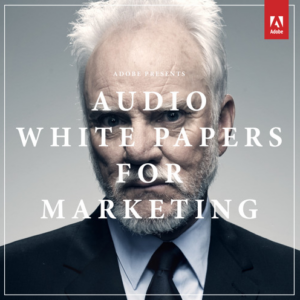
- Adobe’s Audio White Papers for Marketing, voiced by Malcolm *actual* McDowell,
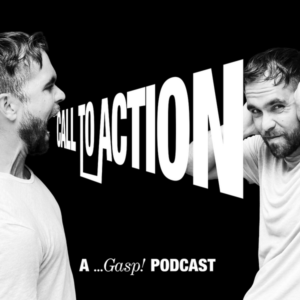
- Gasp’s Call to Action,
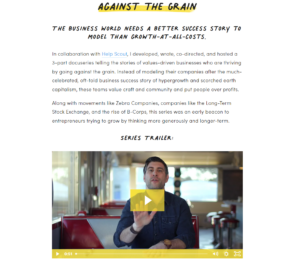
- Help Scout with Jay Acunzo’s Against the Grain (which is kind of a video program as well, but that’s fine),
- and Peep Laja’s How to Win.
And by an absolute landslide, Call to Action took it.
So congratulations to Gasp. That was nominated by Fractional CMO, Graham Fraser, and Doug said…
Doug Kessler: Fun and sweary and it’s got a fun voice to it. Good guests list. They package it up well as a show with segments and everything – I like that.
David: Matt, this one stood out for you as well, didn’t it?
Matt: Yeah, it really did. I’m a massive Rolling Stones fan. So the fact that he had “I can’t get no call to action” as a theme tune… Well, that’s not the sole reason, obviously but okay, I’m interested from the very first 30 seconds, you’ve got me. But no, again, it was everything I love about a podcast where it’s just authentic good conversation.
So I listened to a really amazing one the other week with Chris Paouros. And it was just it really got to me. Really powerful conversation, learning more about the person behind the marketer as well. So I loved how that transcended just kind of the normal marketing conversation. So a really deserved winner.
David: Yeah, I’m glad you called that one out because, Chris Paouros, among other things, runs Proud Lilywhites. And as Spurs fan myself, and someone who you know LGBT Spurs fans are among my very favorite people in the world. You know, always deeply grateful for what Chris does. So to actually hear her interviewed was super.
So brilliant, well done to Gasp and the Call to Action podcast, you are officially the best B2B podcast of all time.
Announcer: Best Long-Form B2B Content.
David: So classically, when you think of B2B content, it’s long-form stuff that often you’ll think about. But this category had, in the end, no white papers and no ebooks on the shortlist. (Thanks to Maureen Blandford, founder of Serendipitus, and Jason Miller of Tyk, for helping Katy Eddy compile this shortlist for us.) Having said that, obviously, we had good examples, but I think there were fewer than they were expecting. Do you think there might be a reason why we might, relatively speaking, see fewer examples in the long-form category?
Matt: I think it’s just so much harder to maintain people’s attention, is the really simple answer. We’re in an environment now where you have seconds to get someone’s attention. So much emphasis is on messaging and short-form at the moment. So for something long-form, that someone could sit there for more than 15 minutes, if I’m honest, to stand out, all of a sudden this is a very challenging category. And the best really have to have something quite incredible to keep people hooked.
David: I think you’re right. And often the thing is that because they’re about something very specific as well, they might not ever reach a very wide audience. I think Andrea Clatworthy made the point that sometimes the best content is so super targeted, it’s not even necessarily in the public domain. You know, a lot of these things will be gated. So it’s probably quite understandable that we had relatively few to choose from.
But we did have some good nominees, and the judges particularly liked After the Virus by Cognizant, but ultimately the three that they picked and agreed on, were:
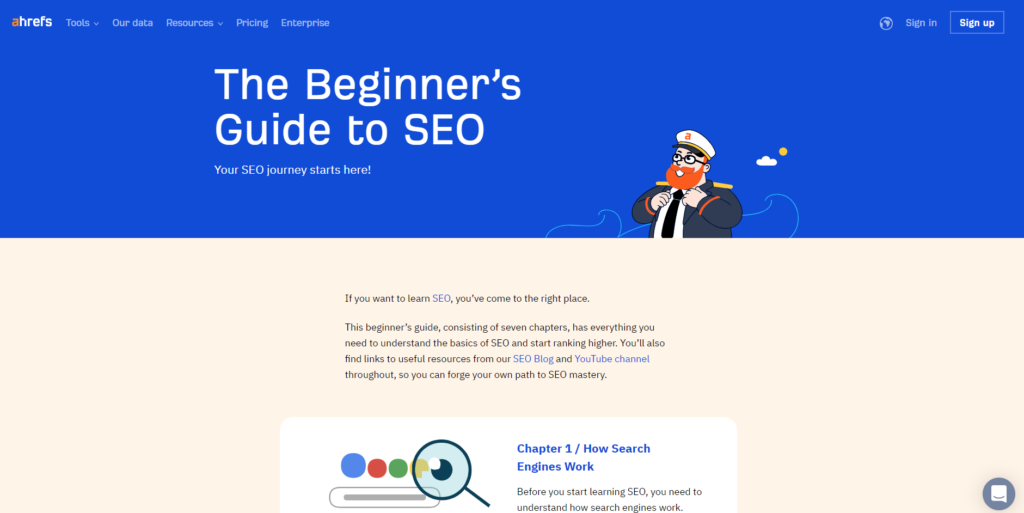
- Ahrefs’ The Beginner’s Guide to SEO,
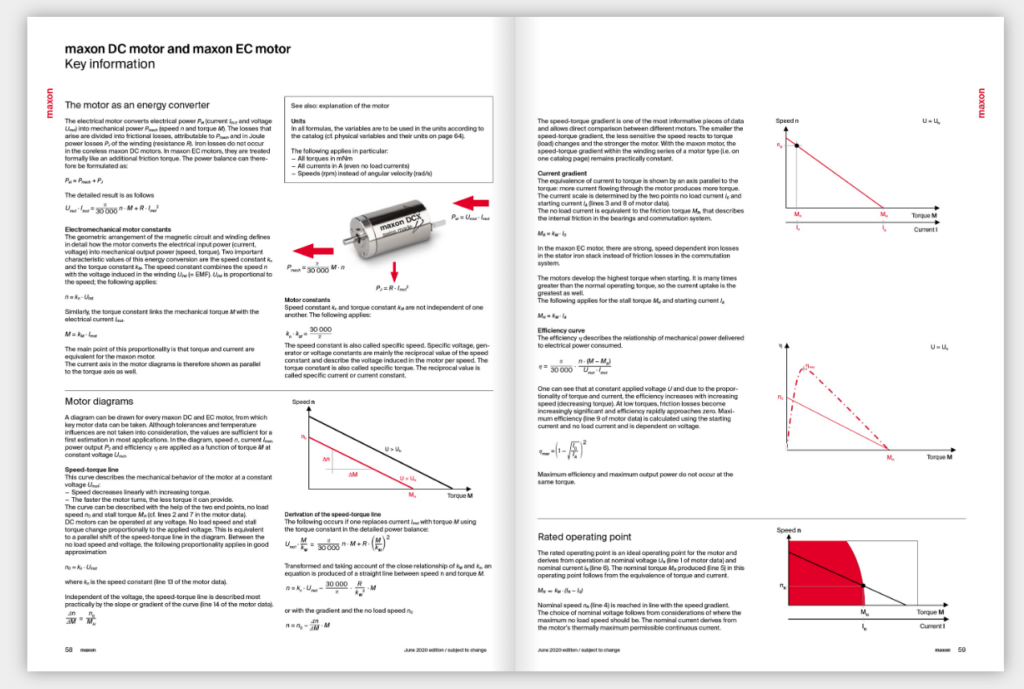
- Maxon Motor, their product catalogue,
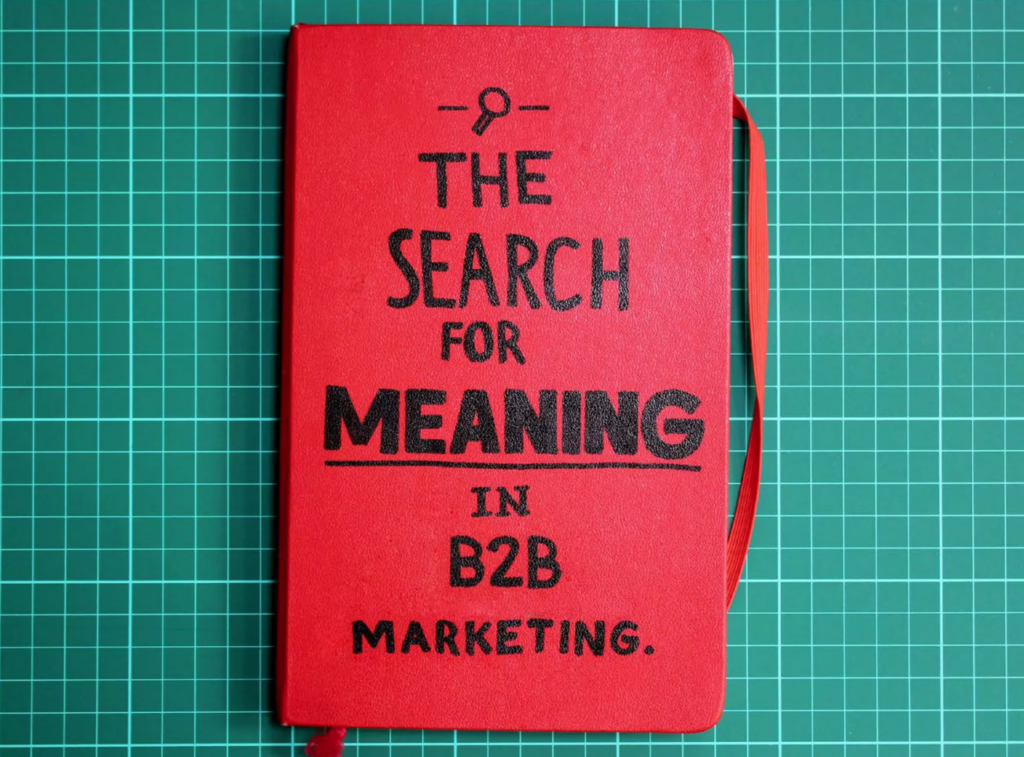
- and Velocity Partners’ The search for meaning in B2B marketing.
Now the vote in this category was really close; there were two votes between first and third place.
The winner was Ahrefs and Matt, this was actually your nomination wasn’t it?
Matt: Have I tipped the balance with my vote here? Yeah, it’s rationale behind it is going back to this point: it’s got to be something pretty incredible to keep you hooked. And this is a piece of content I go back to time and time again as my source of authority and credibility because it’s just an incredibly in-depth, clever, well-written, well-structured guide on how to set up fundamentals in SEO. And it sounds like a boring subject, but so many people must have to go back to this and go, “Okay now I’m gonna jump to this chapter. I’m gonna go to that chapter.” And I’m kind of a weird sucker for content UX as well. And the way they just have everything displayed perfect on the page, they have social proof, excellent categorisation blending in with videos infographics, imagery, and really good, high-quality, authoritative, written content. It’s an absolute treat.
David: And Katy, our Senior Copywriter here agreed with you, she said, “This huge guide could have been overwhelming, but mercifully, it’s not. The writing’s really accessible but without skimping on detail. It’s easy to navigate. And it’s visually clean with cute icons and useful diagrams. For Ahrefs, this format is easy to revisit and update when best practice inevitably changes. And it’s simple for readers to revisit the relevant bits whenever they want a refresher.” Just as you’ve done. So I think you’re both well agreed on that.
So congratulations to Ahrefs, your Beginner’s Guide to SEO is officially the best long-form B2B content of all time.
Announcer: Best B2B Video Ads.
David: Okay. I mean, this is always the eye-catching one because when you think of like, when B2B gets creative, when it gets humorous, when it sparks emotion – it’s often short videos that we’re talking about.
So we’re really grateful to Joel Harrison, Editor-in-Chief of B2B Marketing, and Basware’s Katie Colbourne for helping our Head of Development, Kieran compile the shortlist. The judges enjoyed Lenovo’s Metal Review video, but with some conflict over whether that was really B2B, the shortlist came down to:
- Adobe Marketing Cloud’s Click, Baby Click,
- GE’s Datalandia – Devamping,
- Iron Mountain with Iron Mountain Protects Your Backup Tapes,
- and The Epic Split by Volvo Trucks.
This was the closest category; we actually had a tie in the public vote. So we went back to the judges and found that only one had placed in all three of their top three favorites. And that is Iron Mountain. It was originally nominated by Rishi Dastidar who said, “How do you make *checks notes* storing backup magnetic tapes interesting? Why not try some rhymes and a charming animation style? Wit and whimsy are rarely used tools in this world. On this evidence one wonders why.”
And among the judges, Katie Colbourne agreed she said, “This engaged me quite a bit as it used real-life examples of things we all do and are guilty of. So it had that emotive and connection element. It was also fast-paced, and it was funny from the off.”
What did you think of it, Matt?
Matt: Yeah, I completely agree with those comments. Super engaging. I was kind of wondering what this is at the beginning because you’re like, “Is this gonna be another boring B2B video, please don’t be boring.” And then you’re like, “Okay, this is funny. This is interesting. This is engaging.” But it focused on the problem. It was like, here’s a very clear problem and they’ve gone about it in a really creative way and given it different environments, and then taken it in towards a solution, and it’s absolutely perfect for short-form content, did everything you wanted it to do.
David: It shows that with a bit of thought and a bit of creativity, you can really cut through because there are some big hitters in this category, right? The Epic Split, which is many people’s immediate thing that they think about as great B2B content came third in this category, you know. And so you compete with big hitters like Volvo Trucks or you know Adobe Marketing Cloud who always – and GE – who always do these funny emotional videos, just shows with a bit of thought and a good script, you can really compete on that playing field and stand out.
So, well done Iron Mountain, yours is the best B2B video ad of all time.
Announcer: Best Wildcard Content.
David: Now, some of the nominees didn’t fit neatly into any category. So we created this extra one. Thanks to Rishi Dastidar, who’s Senior Writer at venturethree – and also a darn fine poet – for helping our senior copywriter Steve get to the bottom of this shortlist.
So ultimately, they chose:
- Drawbotics’ Your Favorite TV Shows Brought to Life With Amazing 3D Floor Plans,
- Gartner Magic Quadrant – yes, all of it,
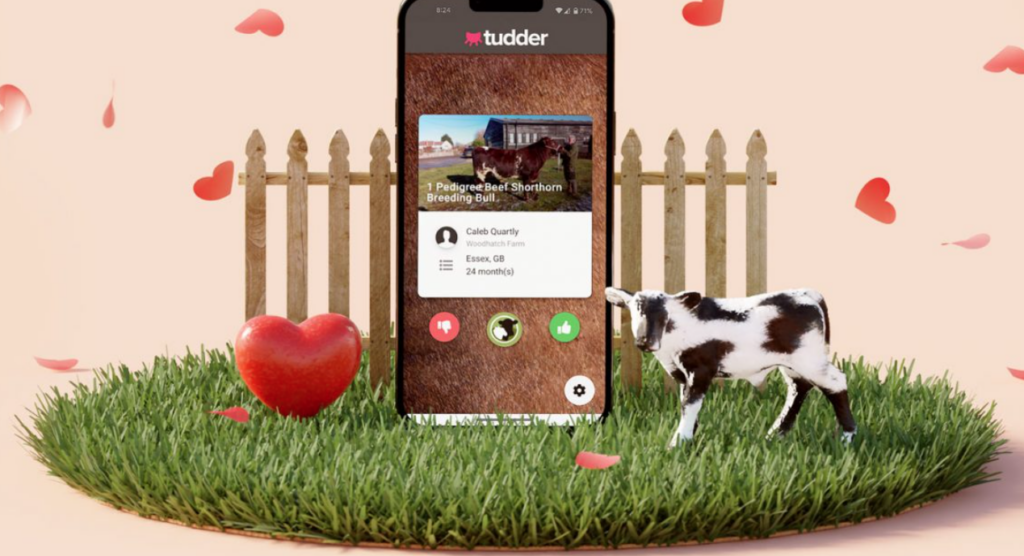
- Hectare Agritech and Tudder,
- and Turtl’s Kill the PDF campaign.
Matt, Rockee helps marketers to get feedback and understand what people really enjoy about their content. So, with access to that information, do you see new formats, new approaches? If we run this in five or 10 years’ time again, might there be completely different kinds of B2B content? What do you think the future might hold?
Matt: Yeah, it’s really interesting, because we started to get feedback we just simply weren’t expecting, where people are asking for slightly different formats of where things work. So for example, you posted for the digital webinar, or something like that. It’s quite interesting, because people go, “This is too long, I want to see shorter versions of it.” So immediately, you’re getting data there to go, “Look, I can take this into maybe four or five snippets, I can put it into social short form. I can even take it to YouTube short form – I can make something really interesting and engaging when I have a long-form piece of content.”
So there’s a huge evolution happening. And that’s what the audience is asking for. It’s related to something they consume in a snappier format or that goes to the precise problem that they’re trying to solve. So that’s something we’re seeing straight away from Rockee at the moment is there’s a kind of a move away from longer form. So that’s something that’s certainly emerging.
And the other one is around creators as well, that that goes back to that authenticity piece, less around AI at the moment, but people who can, you know, rise up as a profile for their brand. An example is Todd Clouser, who used to be at Refine Labs and is now at lavender.ai. He does an incredible job of just making short comic videos that are related to the problem and the solution of the brand he works for.
So yeah, interesting trends emerging. I think it might gravitate towards those creative formats in the next couple of years, for sure.
David: So more profile for kind of, you know, individual personalities, and potentially more atomisation of bigger content pieces.
Matt: Yeah, a hundred percent. We’re moving to snack form type of stuff and we’re on a diet from long form. And yeah, that’s certainly what the audience is asking for. But it’s very competitive; using feedback is a great way of getting an insight as to which are the most juicy bits that you can focus on.
David: So we took the vote for our wildcard content, and Hectare Agritech and Tudder, which, if you don’t know, is their dating app for cows. Again, it was voted the Best Content of 2019. It ran away with this category once again. And Rishi Dastidar sent some audio to explain why he thought it was well-deserved.
Rishi Dastidar: It’s a very simple idea. The idea of a dating app for animals: cattle and sheep. I love the wit here. It’s a very simple idea, but it’s been executed really well. And that cross-pollination just really does cut through and raises a smile.
David: So well done, Hectare Agritech. Tudder is the best, I guess, B2B dating app of all time?
Announcer: The Grand Final.
David: So this brings us to the moment of truth. We have our five finalists:
- Assure Hedge: the Chicken McNuggets blog,
- Gasp with their Call to Action podcast,
- Ahrefs with their SEO guide,
- Iron Mountain with their hilarious video,
- and Tudder, the dating app for cows.
Matt, are you ready to find out what is officially the best B2B content of all time?
Matt: Come on, I can’t wait any longer The suspense is killing me. Let’s do it.
David: Okay.
In third place… we have Hectare Agritech with Tudder.
In second place… it’s Assure Hedge with The Chicken McNuggets secret ingredient is not what you think.
In first place… it’s Gasp with the Call to Action podcast.
I think a few years ago you would never have thought that the best B2B content of all time would be a podcast, would you?
Matt: Definitely not. I don’t think people thought podcasts would ever pick up and no one would listen to a B2B podcast. But love this, I love this winner, thoroughly deserved. It’s real content, real people doing real things.
David: What is it you love about it?
Matt: I’m gonna say authenticity again. It’s real people, you know, having a good conversation, finding out about their experience, how they got to where they are, their expertise, their knowledge, beautifully framed, entertaining. Entertaining is probably another key word; I’d happily listen to it anywhere I go. So, yeah, incredible winner.
David: I mean, obviously, there’s an element to it of: “It’s a public vote, you know.” And with any competition like this, where it’s open, of course, it’s a subjective choice. And, of course, there’s an element of who will get people to vote for you.
But, for me, that’s kind of why podcasts are so good. It’s about getting that community that identify with you. And so the fact that they’ve won, shows the strength of their community, and it shows it’s working, right?
Matt: Yeah. 100%. And that’s what they’re kind of designed for. There are little subsections of all of our various parts of B2B marketing in different markets, and you want to meet up with fellow people who have the same opinions and kind of the same, you know, ambitions and thoughts and things like that. It’s great to see those communities come together, you know, loyal fan base and like good authoritative content. It’s a beautiful mix.
David: Yeah, I think the reason that we have the judges involved in this process, to do the shortlisting, is ultimately, the winner is always going to be subjective; everyone’s going to have a different view. But all of our five finalists – indeed, all of the 19 shortlisted examples – are worthy winners, and hopefully, fairly inspiring examples of good B2B content. And that, ultimately, is what this question was about. It was about you know, finding examples, finding ideas, finding some inspiration. So hopefully, we’ve managed that.
Well done, Gasp. Well done, Giles Edwards. Well done, Call to Action.
So, there you have it, the best B2B content of all time. Thank you to everybody who nominated. Thank you to everybody who voted. Thank you to all our judges. And, of course, thank you, Matt, for joining us to analyse it and go through these with us. I hope it’s been interesting.
Matt: It’s been incredible. Yeah. Thank you so much for having me on.
David: And Matt, if people want to hear more from you, or hear the Sausage Factory – experience the sausage – where would they find that?
Matt: So you can find us on any good publishing channel. We’re on Spotify, we’re on Apple podcasts. Or you can visit rockee.io. And we’re very much trying to dissect what does great content look like in modern B2B, over all of those formats. So yeah, come and have a look.
David: Through the medium of tasty sausage snacks, presumably?
Matt: Through sausage-based analogies and jokes. Yes.
David: B2BQ&A will be back soon, albeit without me. I’d like to thank everyone who’s co-hosted over the years, everyone who’s let me badger them with impertinent questions, everyone who’s sent us questions of their own or copywriting pro tips.
I’d especially like to thank Emily King and Fiona Campbell-Howes for starting this fabulous podcast. And most of all, I’d like to thank you listener for joining me this past 80 or so episodes. Until next time, make great content.
David and Matt: Goodbye!











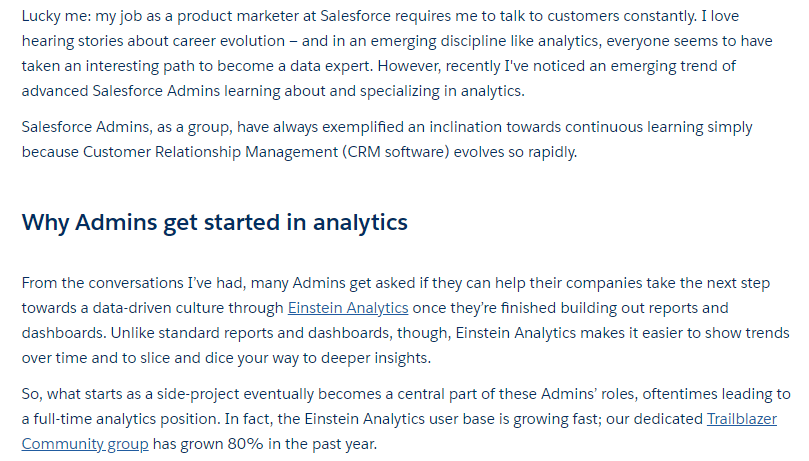 It’s clear who it’s for (Salesforce admins); it’s focused on people; it talks about the audience’s own professional aspirations, backed up with evidence, and it gives specific, relevant tips to help them achieve it, in a friendly, conversational voice. It’s even formatted considerately, with short paragraphs, bullets, signposting and bolding that makes it easy to read and digest.