My nomination for Radix’s B2B Content Hall of Fame isn’t a single content piece or campaign. It’s literally everything produced by the one global tech giant that I think gets content absolutely right.
A 20-year success story
In my two decades in B2B tech, I’ve watched Salesforce.com grow from a scrappy startup into the world’s fifth-largest software company, and the first pure-play SaaS vendor to pass the $10bn revenue mark.
In that time, it’s also expanded its software platform far beyond basic sales force automation, to encompass everything from low-code development tools to AI image recognition.
Lots of things have played a part in that success: the SaaS model, the platform approach, the quality of the software, the dynamism of the people, the company’s genuine determination to give back to society.
To that list I’d also add Salesforce’s focus on creating quietly brilliant marketing content.
(Full disclosure: The Radix team has had a tiny role in creating a minuscule proportion of that content, but that’s not what I’m here to talk about.)
Content that avoids all the usual traps
As a giant global tech firm with a ton of local offices and many marketing teams and agencies scattered around the world, Salesforce could easily fall into any number of traps.
Big B2B tech brands are very prone to all manner of content faux pas: bland content aimed at “everyone”; cheap, jargon-laden pieces churned out for clicks; random acts of content committed by people far removed from Brand HQ; wild inconsistencies in voice and messaging; disengaged briefers and uninspired writers.
But no. Somehow, Salesforce manages to make thoughtful, targeted and consistent – but also lively, engaging and human – content, every day, on an industrial scale.
Four things that make Salesforce content great
Here are four things I think Salesforce content gets right:
1. It’s human
Salesforce content puts people first and technology second. The brand voice is warm and conversational. The brand language speaks to human feelings of aspiration and belonging: Ohana (“family”), Trailblazer, Campground, Dreamforce. Customer stories celebrate real people who are achieving great things – for their employers, for themselves, and for society.
Just look at how this customer video about KONE, the lift manufacturer, focuses not just on the people behind KONE, but also on what the company does for the people who use its products.
https://www.youtube.com/watch?v=_cxq7y6zrVU
2. It’s thoughtful
Salesforce content always feels like it’s been crafted for other people to enjoy. That might seem a weird thing to say, because what content hasn’t been created for human beings? Old-school SEO aside, we aren’t yet at the stage where bots are writing content for other bots to read.
But there’s a difference between “creating content” and “crafting content for other people to enjoy”. Some brands – some writers – just churn stuff out, giving zero thought to the experience of the person at the other end. The result: dull, lifeless content that’s a slog to read or watch.
With Salesforce, I always get the feeling that someone has thought about their audience, and worked hard to create something that will be useful and rewarding for them. The result is content that’s always full of stories, anecdotes, quotes, examples, useful facts and supporting evidence.
Here, for example, is a post I just opened at random off the first page of the main Salesforce blog (which manages to publish around three posts a day, incidentally):
Get the Edge: Why So Many Admins Learn Analytics
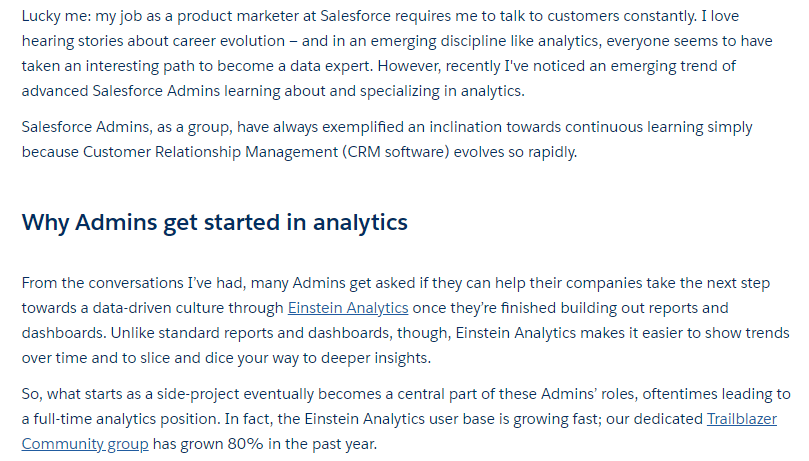 It’s clear who it’s for (Salesforce admins); it’s focused on people; it talks about the audience’s own professional aspirations, backed up with evidence, and it gives specific, relevant tips to help them achieve it, in a friendly, conversational voice. It’s even formatted considerately, with short paragraphs, bullets, signposting and bolding that makes it easy to read and digest.
Even though this blog is ostensibly about a product (Einstein), this is really content for people, by people, about people. B2B marketers and writers, take note.

