B2BQ&A 106: How can I make boring B2B subjects more interesting?

This month’s question gets to the heart of what it means to be a B2B copywriter: the tension between our technical subject matter, and the need to be compelling, engaging, and clear.

Dave Briggs, marketing manager at Nash & Co Solicitors, asks: “How can I take a fairly dry – some would say boring – non-sexy service, such as law, which is often laden with jargon, and turn it into something people actually want to read?”

To answer, we needed some serious inspiration. So we put Dave’s question to B2B copywriter and all-round creative firebrand Katherine Wildman of Haydn Grey – and as our guest co-host we called upon the woman behind WeTransfer‘s breezy tone of voice, senior creative copywriter Robyn Collinge.

This episode also includes a writing tip from freelance copywriter Mel Barfield (also known by her alter-ego AllCopyMel) and some more inclusive writing advice from language consultant Ettie Bailey-King.

You can read a full transcript of this episode at the bottom of this page.

Want to make B2B less boring? Here are Katherine’s tips…

Let go of your ego

To see what’s interesting about a subject, we have to really understand it. And often, that means we have to ask the big, dumb questions about what it is, what it does, and why. Making experts answer those questions clearly is a real skill, and it can take a willingness to look more ignorant than you are. (Katherine calls it “applying intelligent naïveté”, and that’s a phrase I’m 100% stealing for my next meeting.)

Meanwhile, Robyn shared that WeTransfer uses a similar approach: ELI5, or “explain it like I’m five“.

People and scenarios

The most exciting part of a product or service is usually the people who use it, and what they use it for. Failing that, it might be what might happen if you don’t use it. Just like Katherine’s dad used to make his insurance work interesting by telling stories about climbing Huddersfield’s mill chimneys, we can hook the reader into what we’re saying more easily if we illustrate it with a narrative.

Voice makes a huge difference

It’s not just about what you say; it’s how you say it. The language we choose can do a lot to set content apart, surprise and entertain the reader, or just make their life easy. In some B2B markets, just saying something clearly is enough to make you stand out. But as Katherine points out, we need to strike a “lovely balance” where we don’t overcomplicate things, but we do still use the right terminology to be taken seriously.

People, posts and resources on this topic

Helpfully, Katherine’s provided us with links to several of the things she mentioned in our chat…

What you’ll find in episode 106…

1:15 – Meet this month’s guest co-host: WeTransfer’s Robyn Collinge

2:30 – Copywriting pro tip: Melanie Barfield on using the Hemingway editor

3:19 – We hear Dave Briggs‘ question, and put it to Katherine Wildman

18:30Robyn shares her perspective on making B2B interesting

27:15Ettie Bailey-King explains why euphemisms reinforce stigma

Got a question, or a copywriting pro tip?

B2BQ&A is your show, and we’d love to feature you on a future podcast.

Send us a voice memo at [email protected]. And if there are any other thoughts you’d like to share, you can find us on Twitter @radixcom.

How to listen: 

Credits

  • Thank you, Robyn Collinge for co-hosting; we’re glad we could make your podcasting dream a reality.
  • Cheers, Dave Briggs, for the question. I hope you found the answer helpful.
  • Thanks, Katherine Wildman for answering Dave’s question so brilliantly.
  • Last but certainly not least, thanks to AllCopyMel and Ettie Bailey-King for your amazing writing tips.

Podcast editing and music by Bang and Smash.

Transcript: B2BQ&A 106 – How can I make boring B2B subjects more interesting?

Dave Briggs: How can I take a fairly dry, some might say boring, non-sexy service such as law, which is often laden with jargon, and turn it into something that people actually want to read?

Robyn Collinge: That’s a brilliant question. Let’s ask Katherine Wildman from Haydn Grey!

David McGuire: Hello listener; you are extraordinarily Welcome to B2BQ&A, the podcast where we go in search an answer to your question about B2B content writing. This is episode 106.

Robyn: In a moment, B2B copywriter Katherine Wildman will share the methods she uses to get to the bottom of what’s interesting about boring and complicated companies. We’ll also get a copywriting tip from Melanie Barfield, and some more inclusive writing advice from Ettie Bailey-King.

David: Before all of that, though, we should introduce ourselves. My name is David McGuire. I’m creative director at Radix Communications, the B2B writing agency, and we have a brilliant guest co-host this month. If you work in marketing, it’s someone whose words you have almost certainly read, basically on a daily basis. It’s WeTransfer’s, senior copywriter Robyn Collinge! Robyn, welcome.

Robyn: Thank you. Hello. I’m unnecessarily excited to be here. At the risk of making my life sound way more put together than it actually is, I mentioned to David that I had just put being on my first podcast and a list of goals for this year. So here I am.

David: That’s amazing. It’s like serendipity. Here we make wishes come true. That’s what we do. Well, would you like to perform your first official duty as guest co-host and let the listener know how they can get in touch with us?

Robyn: Yeah, I can certainly try. So listeners if you have any comments or suggestions you can find Radix on LinkedIn or Twitter @Radixcom… or if you want us to answer your question on a future episode, record a quick voice note and send it by email to [email protected].

David: Done like a pro. Sounds you’ve been doing it for years.

Melanie Barfield: Hi, I’m Melanie Barfield, aka @AllCopyMel. I’m a freelance copywriter. And my copy tip for beginners is to just chuck your copy into the Hemingway editor. It’s at Hemingwayapp.com. And it highlights any issues in different colors like where your sentences are too long, or where you could shorten and simplify your copy to make it more punchy. You can’t take it all as gospel, but it’s a really quick, free, visual way to see at a glance where you could simplify your copy.

Robyn: Thanks, Melanie. That’s a great tip. I’m a bit of a slave to Google Docs myself, but I’ll definitely give it a try. Now who is asking this month’s question?

Dave: My name is Dave Briggs. I’m the marketing manager at Nash & Co Solicitors in Plymouth. And my question is, how can I take a fairly dry and some might say boring, non-sexy service such as law, which is often laden with jargon, and turn it into something that people actually want to read?

Robyn: I love this question because I’m such a huge advocate for writing like you speak. I’ll tell anyone that will listen that one of the biggest misconceptions about writing or like communicating in general is that using unnecessarily long and complex words will make you sound smarter. When in fact, I think it just does the opposite. And it’ll just intimidate and alienate your audience. So I can’t wait to hear from Katherine as she tackles this question.

David: Yeah, absolutely. I mean, I think as B2B and tech copywriters, ourselves, we spend all this time making dull things interesting and complicated things simple, but maybe we don’t spend enough time breaking down the “how” of that; how we do that in practice. So as you say, to answer Dave’s question, I contacted one of the most creative B2B copywriters, I know, Katherine Wildman at Haydn Grey. And I started by asking her Dave’s question: how do you take a non-sexy, boring subject that’s laden with jargon and turn it into something people actually want to read?

Katherine Wildman: I was thinking about this and my dad was an insurance underwriter, which is about as dry as it gets, isn’t it? But he used to come home from work and tell us stories about climbing up the mill chimneys in Huddersfield where I grew up. And he would only tell us when he’d done that, he wouldn’t tell mum he was about to, but he would tell us, and he would tell us about the people in the mill and the people who worked there. And it was always, always, always about the people that he talked to.

And I think the thing that I approach any project like this with is just a raft of very simple questions. And I saw a great thing on LinkedIn that said, “We don’t ask daft questions; it’s called applying intelligent naivety”. And it’s something…

David: Ooh, I like that.

Katherine: Yeah. Isn’t it lovely? It’s really nice. And people go, like, you know, “Ooh! Aren’t you clever”, which is always nice. And I think it’s about sitting with people in the room and making them, forcing them, to break it down for you. Which means you have to pretend to be far more ignorant than you might be.

Or you might be extraordinarily ignorant. I did a project about cryptocurrency recently. And I had to ask a lot of really basic questions, which is, “But what do you mean? But what do you mean? So what is it? So what? Why does that do that?” And the secret to making people break it down, which I find very hard, is to shut up. And just look like you don’t know what they’re saying, until you understand what they’re saying and don’t pretend to know.

So it’s a question of making sure that you could then take it to another parent in the playground, or to your elderly mom, or your grandma and say, “Oh, I’m doing this project. And what they do is XYZ”, and until you can break it down to XYZ. So it’s not X with the flourish, Y with a flourish, Z with, you know, some little acronyms thrown in; it has to be broken down so that you understand it. And once you understand it, and you can feed it back to them, then you’ve absolutely cracked it.

And then how you then make that glossy and interesting, I think is you, you throw it back to them. And then you sort of get a feel for where they want to go with their tone of voice. So whether they want to be edgy, or they want to be very, very sturdy run of the mill, or perhaps for some people, just the simple fact of breaking it down into Janet-and-John English is enough to make them stand out.

So at that point, I would look at what other companies in the field are doing in the UK and abroad. You’ll find like particularly Australia, New Zealand companies can be really quite wacky where we won’t go that far. But you can see where you could take it and see where you can pitch them in the middle of all the the competition that they’re trying to gain business from or do business alongside, how can you make them stand out?

So then you bring along, you know, the Voicebox kit? Nick’s brilliant kit, where he’s broken down these 11 voices? And you can show…

David: For the for the audience, this Nick Parker’s kit, yeah?

Katherine: Yes, sorry. So Nick Parker’s brilliant Voicebox kit, which, mine is getting ragged around the edges. And Nick has these brilliant examples of how the financial companies write about themselves, how do insurance companies write about themselves, and you can see people’s faces light up in the room where they go, “Oh, so we could do that!”

They’ve never thought that they could do anything other than this “business-focused solutions”, all of the stuff that we wade through every day, and become a little bit more human and a little bit more approachable and a little bit more understandable. And then it makes life easier for everybody. And then and they can choose and you can see you can read the temperature in the room as to where they want to go with it.

And all of a sudden, you’ve got this very dry, turgid, verbose, reams and reams of copy that become like a conversation. And as soon as you’re having conversation, somebody wants to engage with you.

David: Absolutely. And one of the things I was interested is that you were talking very much about how your dad was telling stories about how the, you know, not that so much the insurance but what was being insured and what the insurance meant. Are there kind of… once you’ve got the way that you’re writing about the subject, then there’s the issue of what you write about, right?

Katherine: Yes. So then it’s a question of asking people to paint you a picture. So if they have, for example, policy insurance in place, what happens if something goes horribly wrong? And then what happens if they have this policy in place and how they can sleep at night? It’s all those human emotions where you’re basically wanting to either save people time, save them peace of mind, save the money, make them money? How does their life improve by having this in place?

And again, it’s those Janet-and-John flinty details where somebody can come to it afresh and just read it and understand straightaway what you’re talking about. They’re not having to try and decipher the language. And it just makes it simple and accessible and your work is to break down those horrible pages and pages of words to just go “Actually, what does that actually say?”

And usually, the ratio is usually about sort of six paragraphs to half a paragraph, really. And there’ll be a bit nervous about that, because that’s very bold and scary. But also it saves so much time. Particularly if you’ve then got a messaging framework in place, and then everybody’s lives are just so much easier.

And I think another layer that I would throw on when you’re doing your competitor research is if there’s something where you can look at reviews online. And I know Jo at Copyhackers talks about this, which is mining for voice of customer. So it could be that you’re looking at Trustpilot, it could be that you’re looking at Google ads, it could be that you’re looking at what people are saying about the competitors, and what they do well, can you take that line and apply it to your company?

And ask the people in the room why they come to work every day. What is it that gets them out of bed? What is it that makes them feel like they’re making a difference? Because people in big businesses don’t tend to get asked questions like that, you know, “How did you get here? Why are you here? What makes you, you know, sit on the train for an hour every day again, now, to come and do this? It’s not just so that you can pay the mortgage. What is it that lights your candle about it? And can you share a little bit of that passion?” Because people will have a story to tell. And there’ll be something, there’ll be a nugget, that hand on the door in the doctor’s surgery where they turn round and they just say something and you’ve just got that gold dust, you’ve got that line.

David: Yeah, absolutely. Is there an element with something like commercial law, for example, where you need to use a certain amount of the right language or else people might feel that you’re not taking it seriously, or they might not take you seriously? Because I know, from a stakeholder’s kind of point of view, they’ll go, “If we don’t say the right words that all our competitors are saying…” then you know, the audience… if the audience is already in a world where some jargon is fairly established, is there a balance, there?

Katherine: There’s a lovely balance to be achieved. And as well, Mr. Google needs the words doesn’t he? Mr. Google needs the search words, but I think there’s a way that you can scatter them, rather than drown us in them.

Vikki Ross put a beautiful post on LinkedIn just last night about “You need to be careful where you pitch the language because you’re trying to say something that’s too technical for your audience, you’re going to exclude that audience. And if you say something that’s too simple, they don’t want to be talked down to her or explained to.” So there’s that pitch of where you’re going to be and as well paying heed to Mr. Google, who does need to find this lovely company in the midst of everything. It’s making sure that the people who need the product can get the product.

Catherine Every, again, did a brilliant post about a crypto ad, and you read this ad that she posted on LinkedIn; wouldn’t have a clue. And I think as copywriters we understand quite a lot about quite a lot of things. I looked at this thing, I thought that could be in a foreign language for all I know. But what was so clever and what Catherine highlighted was the people that need to know will know that that’s exactly for them. So it cuts out everybody else. So you’re speaking exactly to your audience.

And that’s again, that’s your audience research. That’s understanding how far down the buyer journey people are. If they’re doing policy three, do they really need to read these documents again? No. Do you need to attach them? Yes. Can you make their lives easier? Yeah, probably very much so. Even if it’s just the way that you lead into, and some people do it, and they’re quite irreverent, you know,”Read this later”.

David: Are there go-to questions or approaches that you have? You know, if you’re trying to pull out what’s interesting in a dull subject?

Katherine: So I always start every project with you get as many people as possible on the call, from the really senior people, to the sales team, to the marketers to everybody.

And my first question is, “So what do you do?” And then the secret is to shut up. And they will all, they’ll wait for everybody else to chip in. And the secret is to shut up until everybody has said every little last thing they could possibly say and then they’ll chip in again. And your thing is to just be quiet.

And then my next question is “So why should I care?” And it’s it gets to be… People say after I’ve drilled down into these, you know, it was like a therapy session. And I’ve had people in tears. I’ve had people resolving longstanding problems that have been going on in the business, but it’s a question of asking “why”.

And then this is another Copyhackers tip, which is “So that… So that… You do that so that…” and it gets people right down into the absolute essence of why they do what they do. And how and for whom. And it’s you just… people come up with things that are really surprising. And it’s a question of until you absolutely understand that you can’t go any further down that particular line, you keep asking.

And for me, the hard thing is to not pretend that I know and to presume, so have confidence that the people that you’re talking to know what they’re doing and why. And you are just there to be the mirror and to ask questions and to get them to tell you about it.

David: It’s that, what was it, intelligent naivety? It’s that thing, isn’t it? That sometimes I think that we have as external writers, we kind of have a licence to be the dumbest person in the room.

Katherine: Totally.

David: If you’re an in-house marketer, saying, “I don’t know what that means”, even if you’re pretending not to know what that means, must feel really painful because you’re undermining your status. Whereas we, you know, we have a licence to say, “What does that mean?” And even more cheekily, we have the licence to ask “So what? Okay, why do I care?” Or when someone goes, “Oh, we’re the best at this”, “Can you prove that?” No, we have to ask rude questions and stupid questions.

Katherine: Absolutely.

David: And that naivety is a superpower.

Katherine: It’s an absolute superpower. You’re absolutely right. And I’ll tag team. I work a lot with an art director, Keith Noble, and he and I will tag team until you’ve absolutely drill down. And if they won’t let me into the nuggets, Keith will try. And by the end of it, we’ve just got to the heart of it. So he’s got his design ideas. I’ve got my writing hook.

But also it’s that scenario thing. And these are all things, like…. the first copywriting book was Andy Maslen’s, “Write to Sell”; it’s the one book I’ll never lend to anybody. It’s full of squiggles, turned over corners, it is… That’s the thing that doesn’t leave the bookshelf. And he does that scenario asking in that. “So what happens if I come to you for this product? What happens if I don’t come to you for this product? What won’t happen if I come to you for this product? What will happen if I come to you for this product?” And by the time you’ve got to the fourth one, they’re telling you all the lines that you need for the website.

So it’s… Andy did psychology and you can so tell in the way that he writes because it’s all people. It’s all really quite simple what we do. But fascinating, because it’s all people, same thing. And everything is connected all the way through. So I’m sure you find this as well. You go from project to project to project and people start telling you the same things. You’re like, “I did on the last project. I’ve just learned about this”, because the trends emerge in business, and we just get to kind of sometimes we ride the wave, we’re a little bit ahead of it for people and other times we’re catching up.

So yeah, we do we have licence, licence to thrill.

David: Thanks again, Katherine; that’s a really helpful response to Dave’s question. I’ll put links to Haydn Grey and all the other resources you mentioned in the show notes. Robyn, what stood out for you there?

Robyn: Quite a lot, actually. I really love everything Katherine said. And I think particularly this idea of asking the basic questions, like I’m such an advocate for asking stupid questions, or as Katherine put it, applying intelligent naievety. It’s so good.

David: I’ve been searching for that phrase.

Robyn: I can’t wait to casually drop into my next meeting.

David: Yeah, absolutely. Just just as copywriters you get to be the dumbest person in the room. And I think as we said, it’s just a superpower. That licence to ask that slightly rude question that as grown-up business people were not supposed to ask, right?

Robyn: Yeah. And I think I’m actually really glad you guys spoke about that. Because sometimes I think as a writer, I worry that I come off a bit rude if I’m in meetings with people and briefings and I’m sitting there going, “Yeah, but why? Why is this important? Why should I care?” And so it’s, like, really reassuring to know that other people also sit there and ask these kinds of stupid questions.

David: I genuinely once did a talk where people I, I was speaking at an event and I smuggled I’d got my kids out of school and I smuggled my kids into the event. And I got someone on stage to explain what they do, and they were an accountant. And they’re like “Ah, we do this and that” and I literally put my like five year old daughter in front of him just to go “Why? Why?” until he said something that she could understand like why you do these things. And then I had my son who was slightly older and slightly ruder, and I got him to just kind of keep asking, “So what?”

Robyn: I love that, like getting your kids in there an early age. It’s funny, you should say that as well. Because something we often do that we transfer as like a little exercise, this type of stuff is ELI5. Have you heard of that before?

David: No, no, I haven’t.

Robyn: Erm, so it’s a little acronym, which usually I’m pretty anti-acronym, stands for “Explain it like I’m five”. So I think it comes from like a Reddit thread, where people just kind of go to get simple explanations to like, I guess, concepts or problems or questions. But I guess the clue’s in the name, the idea is that you want to explain something, the way you’d explain it to a five year old or in a way that a five year old would understand.

So like sometimes if we’re getting a brief in about a new tool, or a new feature at WeTransfer, we’ll do it as an exercise with like our product marketing managers and break down this thing, the way that we would explain it so a five year old would understand it.

Or sometimes in my head, I think as well, “Would my grandparents understand this?” Because one of the things about WeTransfer with our free product our audience is so broad, so we have to make sure everyone can kind of understand what we’re talking about. And so yeah, like breaking down functionality and explaining the way you could do a five year old’s a really good kind of thought starter, for when you’re writing copy about things.

David: But that’s the starting point for the copy, if you like, not the finishing point, because obviously, you have a lot, you know, your pro users and your bread and butter users, you know, are going to be kind of, you know, marketers, designers, you know, experts in their job and stuff as well. Right?

Robyn: Yeah. And then we do actually have a slightly different tone of voice for our pro audience, which I really like.

So we have a paid subscription service at WeTransfer, WeTransfer Pro, we also just dropped, WeTransfer Premium as well, where you get unlimited everything. And but yeah, with our kind of pro and premium audience, we know that these kind of small business owners, creatives, they work in agencies, so we’re able to be a bit more kind of tongue-in-cheek sometimes with our copy and really make specific references to the creative industry. Like, we can make jokes about like kerning and pixels.

And we understand it will alienate some people, but the type of people we’re going after will get the reference. And, you know, we can kind of empathise like, “Oh, we know working with clients can sometimes suck, but we’re here to help you!” They’re just these little nuggets that we know this audience will relate to.

David: Absolutely; so much is about kind of knowing your audience. So how do you take it from being easy to understand and being clear, and to actually take it into something that’s engaging and that people actually actively enjoy?

Robyn: Yeah, it’s quite… It’s tricky to kind of put your finger on it sometimes, especially because I started at WeTransfer as the very first copywriter, like four years ago. So I actually got to establish the whole tone of voice and kind of put that together. So it’s largely based on my own personality. You put it into a formula. “Okay, this is how we make it sound appealing” because it’s just kind of, “Okay, how does it sound in my head?” which makes you know, documenting our style guide and stuff difficult.

But I do have like a few go-to methods that aren’t just “Get inside my head and see how I’m talking about it.” I think I can’t remember where I heard at first, so apologies if I’m like misreferencing someone, but I read this idea that copywriting is rarely about writing about products, it’s more writing about problems. And Katherine does kind of touch on that when she talks about finding the human emotion in what you’re writing about finding your brand’s “why”.

Because when you’re writing, I guess a landing page copy or even email copy, something where you’re trying to convert someone, you’re not really writing about what your product is, you should be writing about the problem it’s solving for them. So how is your service or product, making their lives easier? What’s it solving for them? What frustration are you removing from their life? Like how will their lives get progressively worse if they didn’t invest in whatever you’re selling? And that’s kind of something I’d keep in mind. You shouldn’t be writing about your product, you should be framing it as “What’s the problem and how are you the solution?”

And also trying to avoid just saying “we” and “I” and talking about yourself; you should always kind of be writing in the second person. And yeah, using things like “you” and “your” and yeah speaking directly to people.

David: Absolutely. Like I used to… write a lot of work in the public sector. And, you know, there was a lot of kind of very kind of jargon-filled stuff. And, you know, at the time I was writing PR, I was having to get into the newspapers and stuff. I was like, well, fundamentally, why should people care? And usually anything that you as an organisation want to communicate, there’s a reason that you’re communicating it, right? You need to tell somebody, and they need to know, because of something. And actually, it’s the “Why, why are you…”

There are very few things that are actually intrinsically boring, you know, that that actually, it’s how they wrapped up, it’s how they’re presented. But when you get down to it, somebody needs to care about it, because it makes a difference to them. And why do they need to know?

Is that kind of what it comes down to? Who, who you’re talking to? How would they talk about it? And why should they care? If you got those things, you know, then you’re automatically making it a bit more engaging, I think.

Robyn: Yeah. And I think what you’re saying about nothing’s ever boring, it’s… all of the copywriters I know, are just inherently curious people, like they want to get to the bottom of things, you know, we end up in late night Google and Wikipedia rabbit holes, like about some random subject, and I think, kind of getting that passion to translate to whatever you’re writing about is a real skill. And, yeah, quite often, just breaking things down to their simplest format.

And, you know, I had a previous manager who, whenever I’d write copy would just be like, “Okay, but what are you trying to say? What are you trying to say? What, Why? Why should I care? Why should I? Say it in less, like say it in…” and I think he would say like, “Say it in three sentences. Now try and say three words” and really get to the core of what you want to say. I think once you can do that, yeah, you can. You can get people to care about it.

David: Before we wrap up, there’s time for some more inclusive writing advice from Ettie Bailey-King.

Ettie Bailey-King: No euphemisms. Steer clear of euphemisms, coded language, or awkward, anxious workarounds for talking about people’s identities. Just be clear, and specific and accurate. Euphemisms signal discomfort, and they reinforce stigma.

If you’re not sure whether something is considered a euphemism, then you might want to run it by some people from that affected community. Or you could very quickly check on social media and see who’s using that language. Is it being used by people from that community? And are they using it with what looks like energy, enthusiasm and pride? If not, it’s potentially the kind of euphemism that’s used by people outside the community, and just reinforces otherness.

So some examples of euphemism here might be the way that many white people will use the word “diversity” when they actually should be talking about anti racism, or anti white supremacy, or anti oppression. Or the euphemisms might be terms that you might have heard in the past, for example, “handicapped”, which used to be a phrase that was used for disabled people.

Robyn: Thanks Ettie for that tip, and listener, you can hear more inclusive writing advice from Ettie next time. Thanks, also to Katherine and Melanie, for sharing your advice in this episode, and thanks to Dave for the question. Hope you found our answers useful.

David: And thanks to you, Robyn; you’ve been an awesome co-host. Delighted to have been your first podcast experience. I hope it’s not been too traumatic.

Robyn: No, honestly, I’m thrilled. Had a great time.

David: Absolutely come back any time. And remember, listener: it could be your question we answer in a future episode. If you have a question for B2BQ&A to answer, email a voice memo to podcast@radix -communications.com, or find us on social media.

I’ll see you next time for another B2BQ&A. Until then, make good content and remember: no subject is inherently boring, though I did once write about a company who drilled very precise holes in very hard metal and that… yeah, I have to concede that one.

David and Robyn: Bye!

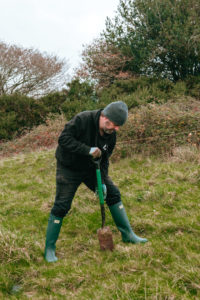
How many Radix employees does it take to plant a tree?

Since partnering with Plant One last summer, we’ve pledged money for 223 trees to be planted  to help protect our local ecosystem here in Cornwall. But while we know funding trees is fantastic, we also wanted to get hands on, and actually plant them.

So for one windy day in December, a group of us swapped our keyboards for shovels and got involved at a Plant One event just across the river from our offices, at Tregew Barn in Flushing.

How to plant a tree

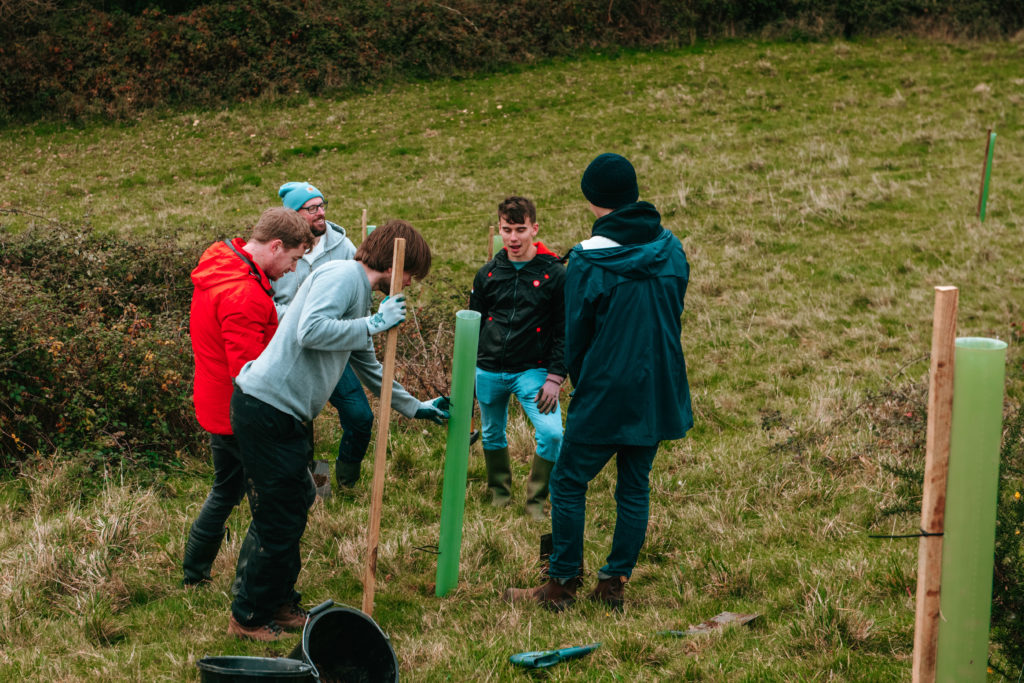
Eleven of us arrived at 9.30am to face a muddy field – I mean, this is Cornwall after all. But apparently not all of us had thought this far ahead. And so, wearing ten pairs of boots and one pair of converse, we made our way through the mud to a steep hill waiting to be filled with trees.

Before we could start planting, we needed a lesson in how actually to plant a tree.

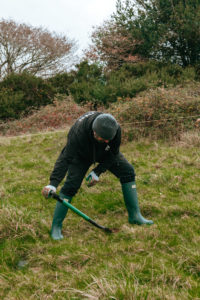
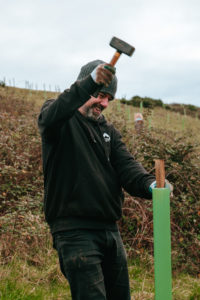
The planting process itself was definitely simpler than I was expecting. Make a slit in the ground with the shovel, put the sapling in, firm the soil, place a protective tube over it, and stake. But unsurprisingly it became less simple once we started. You’d think the wet ground would make it easier to dig. Nope.

The tricky part was finding a spot of ground soft enough to push the shovel in. It was tempting to just try to force it rather than searching for a more amenable spot but, after a couple of battles between shovel and ground and a slight bend forming in the metal, it was clear the shovel would usually lose.

Despite the hard ground, we soon found our rhythm and began to make steady progress. The site had been divided into three and soon enough we had finished the first third and were ready for a coffee break. By the time we had finished the second we were ready for lunch. Most of the volunteers were ready to call it a day at that point, too (and I don’t blame them.) But Team Radix ploughed on, determined to complete the site.

If you build it, they will come

This habitat – ancient woodland bordering the tidal river – is rare and vital for wildlife. The aim for the day’s work was increase the cover of woodland next to the river by a quarter. And together with employees from St Austell Printing Company and Scence Skincare, alongside 15 members of the public, we planted 497 trees over the course of the day.

No wonder our arms were still aching three days later.

To mimic the woodland that we were extending, we planted Cornish and English Oak, Holly, Elderberry, Hawthorn, and Rowan trees. And added Wild Cherry and Grey Willow to improve the biodiversity and resilience of the habitat.

Hopefully in 20 years’ time we’ll be able to go back and visit a growing woodland. The expert tree planters at Plant One checked our efforts, so there shouldn’t be too many casualties despite the Cornish weather.

What did we make of our first tree planting day

Personally, I can say that I really enjoyed taking a day out of the office to plant some trees and do some lasting good. I can’t wait to do it again once we’ve pledged even more trees to plant. But what did everyone else think?

Lisa says: “It was a really great day, not only being outdoors in the fresh air planting trees that will be there for future generations, but also to hang out with and have fun with the Radix team – many of whom I hadn’t seen in person since the start of the pandemic. It’s surprising how many trees you can plant in such a short amount of time too.”

“Tree planting wasn’t quite what I expected,” Ben P adds. “But then again, I rocked up in a tattered old pair of Converse and still managed to have a really good time. I recommend planting trees.”

And Jordan says: “It felt great to be active and outdoors and to feel like we were all contributing to a great cause. As someone who rarely gets into the office these days, it was brilliant to be involved in something like that with my friends and colleagues.”

And it’s not just Radix who had a great day, our fellow planters from other Cornish businesses did too.

Bryony Simpson, Digital Print & Design Assistant at St Austell Printing company says: “This was my first trip out with my new team at St Austell Printing Company and it was a pleasure to be included in such an inspiring event – working as a team to create a better future together.”

Beth Mayman, Operations Manager at St Austel Printing Company, agrees: “Tree planting seems like such a simple thing to do, but to plant trees on this scale actually takes a huge amount of planning, with a good dose of expertise, energy and enthusiasm – which the Plant One team have in bucket loads! It was a rewarding day spent with a great bunch of people, coming together to make a difference. Count us in next time!”

So how many Radix employees does it take to plant a tree?

Apparently, five. (Plus another six to keep the photographer busy!)

Tree planting is a team effort

Three reasons why it’s better to write fresh copy than “finesse” your existing content

As copywriters, we’re often asked to “finesse” or “wordsmith” someone else’s copy. It’s often content that’s been written by one of the business’ subject matter experts (SMEs) or, less frequently, something that another writer or agency has worked on which didn’t quite hit the mark.

Copyediting existing work is a complicated business. It’s rarely as simple as swapping out a few words or tightening up the grammar – which means, most of the time, it’s better to ask your copywriter to start from scratch.

Here are a few reasons why:

1. It’s more efficient to brief a writer than to do it yourself

Often, marketers hope it’ll be quicker or more economical to ask an SME to write up a draft of their piece before passing it onto a copywriter or editor for a quick tune-up to make sure it’s up to scratch.

But that’s rarely the most efficient way to use your time. Finding half an hour in an SME’s busy diary to brief a copywriter is far easier than carving out several hours to write a blog – or days to write an ebook.

There’s another benefit to talking to a copywriter before a single word is written: a briefing call is the perfect opportunity to sound out your ideas with someone who’s trained to ask probing questions. A writer can help your SME dig into the topic, think about it in different ways, and find the best story to tell from a marketing perspective – ideal if your SME is on the technical side of the business.

That leads me onto my next point…

2. Subject matter expertise doesn’t always translate into writing expertise

Just because SMEs know a subject inside out, doesn’t mean they’ll be able to write about it in an engaging way that appeals to your target audience. And why should they? Even if your SME regularly writes technical documentation, writing good marketing copy takes a totally separate skillset.

Writers take your SME’s knowledge and ideas and consolidate them into a compelling story, finding the right hook and the structure that neatly guides readers to the end and the call to action.

Your copywriter will also have experience in conforming to voice and tone guidelines, using the right SEO keywords, and working in templates. They’ll have a good understanding of how to write in a way that appeals to your target personas, and strategies to encourage your audience to click that “get in touch” button.

When it’s written from scratch by a copywriter, your piece will have all the features that make content valuable – from the very beginning. It’s much harder to come along and squeeze keywords into someone else’s draft, for example.

3. It might need much more work than you expect

It’s difficult not to get attached to something you’ve written, especially if you’ve spent hours on it. Which means it can be a nasty surprise when your SME opens up the document after a copywriter has done some “wordsmithing” to find something that looks like a totally different piece.

From the writer’s side, it can be hard to estimate how much editing a piece needs until you’ve had a comprehensive look at it (or even until you’ve started working on it). On rare occasions, it might just need some trimming or the odd sentence rewriting to make it the best it can be. Sometimes, you make a significant edit near the beginning which means you have to make smaller changes throughout.

Or, it might need ripping apart and totally restructuring.

At that point, you’re basically looking at a full rewrite. Some people view a copyedit as a faster or cheaper alternative to a copywriter producing something from scratch – but it doesn’t always end up being the case. If the piece needs a rewrite, you might even need to hop on the phone to discuss gaps in the content, or the new structure. And the project may go through more rounds of amends as you work together to align your SME’s original vision with your marketing goals. So that time you saved by writing the draft in-house is lost anyway.

An experienced writer and a thorough brief usually yields better results

That doesn’t mean we won’t ever copyedit something for a client. Helping an SME work through their ideas and find the best way to communicate them is actually one of my favourite types of project. But that requires a lot of trust between your SME and your writer – and it’s best achieved without a looming deadline.

So how do you know if it’s worth asking for an edit? There are situations where it makes sense. Maybe you have a flagship content piece that needs a new intro and updated stats, but the product sections are all the same. Or maybe you’re repurposing a blog series into a downloadable ebook and you need to smooth the transitions between the sections.

If you’re unsure, it’s worth talking to your copywriter about what they’d recommend. Often, a comprehensive brief is a far more straightforward way to get copy quickly, if that’s what you need. Or, if your SME has already written something, your writer can use it as source material for a fresh piece.

B2BQ&A 105: How do you evaluate B2B content quality?

This month’s question comes from Caroline Robinson who, among many other roles, is the senior editor of the British Cartographic Society’s popular magazine, Maplines.

She wants to know: “What QA/QC processes do other people have for editing content?”

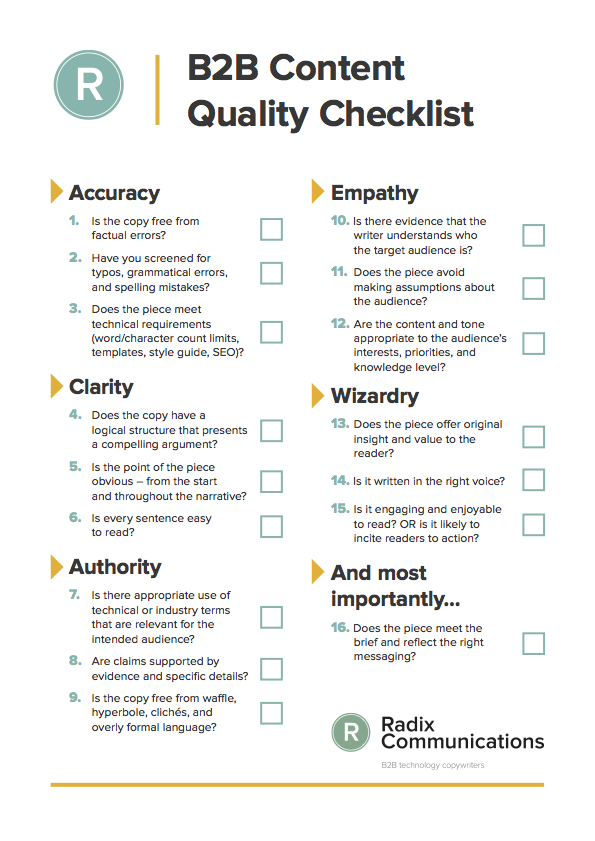
It’s a fantastic question. At Radix, we use a version of this 16-point copywriting quality checklist when editing each other’s work, but we were also super curious to find out what processes others use to ensure the quality of their B2B content.

So we spoke to Laurence Taphouse, Director of Digital Marketing and Content Strategy at Deltek‘s EMEA & APAC Demand Centre, to find out how she ensures consistent quality across so many writers, subjects, and territories.

We also called on the members and experts of B2B Marketing’s Propolis Hive for Brand and Content Strategy and got a detailed response from Scott Stockwell, Propolis Hive Ambassador for Strategy and Evolution. You can hear Scott’s process in full, later in the episode.

This week, our co-host is the luminous Katy Eddy, a Senior Copywriter here at Radix and editor extraordinaire. She recently gave an editing masterclass at a local university, and shares some of her approach.

And we have two excellent copywriting tips this month. Giles Edwards tells us how to keep our content succinct, and we hear the first of a series of tips on creating inclusive copy from language consultant Ettie Bailey-King.

You’ll find a full transcript of our podcast at the end of this post.

Laurence’s top tips for consistent quality

First, Laurence tells us how she achieves consistently high quality across Deltek’s varied content.

A consistent editor

“You need to have a consistent editor; I think it’s crucial,” Laurence explains. “For us, it’s our product marketing team. So when we do editing, it will be me; you always add a constant.”

Include someone with industry acumen

“You need a person who’s got all the industry acumen,” she adds. “Someone who understands their role in the industry, who can make sure the messaging is resonating the way it should be.”

Check – and check again

“Once all that is done, a second pair of eyes can check this is all good,” she concludes. “And then we go back to me for proofreading, making sure there’s no grammatical mistakes or anything like that. Once that is done, we all agree that the content is good to go. And we always follow the same process.”

Scott’s advice from a tech giant

Next, Scott gives us a sneak peak into the content quality process at a bona fide tech giant. And, like Laurence, he reveals that quality control starts much, much earlier than the final edit.

“Assets go through agency production, and then face a rigorous ‘go live’ test before they’re launched,” he tells us. “The ‘go live’ alone has 12 elements that are checked before an asset is signed off, including the brand guidelines, legal requirements, and SEO optimisation, among others.

“Much of this happens within a standard set of tools and apps that all the content team share along with supporting workflows. The squad of marketers working on the campaign… will all have an input into the content being made for the campaign and how it will be deployed. So that quick quality check is a final glimpse at a far more detailed journey that each asset has taken to get there.”

Radix’s Quality Assurance Checklist

At Radix, our content quality checklist consists of 16 questions. We check for accuracy, clarity, authority, empathy, and wizardry to make sure our content is as complete – and as appropriate for its intended audience – as possible.

If you’d like to adapt it for your own purposes, or even steal it wholesale, feel free:

Steal this 16-point quality checklist when editing your B2B content. Click this image to download a printable PDF.

(Click the image to open a printable PDF)

In this episode, you’ll find…

1:10 – We welcome this week’s co-host, Katy Eddy

1:55 – Our first copywriting tip from Giles Edwards on how to keep content succinct

2:10 – We put Caroline Robinson’s question to Laurence Taphouse

15:20 – David shares Scott Stockwell’s thoughts about how to keep quality in your content

17:35 – David and Katy discuss her three-stage content editing process

25:47 – We hear copywriting tips from Ettie Bailey-King about how to keep content inclusive


We want to hear from you…

Have you got a question for B2BQ&A? Or a copywriting tip you’d like to share?

You could be featured on our next podcast. Send us a voice memo at [email protected]. And if there are any other thoughts you’d like to share, you can find us on Twitter @radixcom.

How to listen: 

Credits

  • Firstly, thank you to Katy Eddy for your excellent insight and co-hosting skills.
  • Thanks to Caroline Robinson for your question. It was really interesting to explore.
  • And thank you to Laurence Taphouse for the insights into Deltek’s quality process.
  • Thanks to Scott Stockwell for your brilliant contribution, too.
  • And last but absolutely not least, thanks to Giles Edwards and Ettie Bailey-King for your brilliant copywriting tips.

Podcast editing and music by Bang and Smash.

Transcript: B2BQ&A 105: How do you evaluate B2B content quality?

Caroline Robinson: I would like to know what QA/QC processes other people have for editing content.

Katy Eddy: That’s a great question. Let’s ask Laurence Taphouse from Deltek.

David McGuire: Hello listener, you are extremely welcome to B2BQ&A, the podcast where we go in search of an answer to your question about B2B content writing. This is episode 105.

Katy: In a moment, we’ll ask Laurence Taphouse, Deltek’s Director of Digital Marketing and Content Strategy for EMEA and APAC, how she manages content quality, and get copywriting tips from Giles Edwards and Ettie Bailey-King. Plus, we’ll have news of a helpful new resource you can use to check your own B2B content quality. That’s a lot of stuff.

David: That is, it’s a lot, isn’t it? It’s a packed episode, I know. Before all of that, though, some introductions. My name is David McGuire. I’m Creative Director at Radix Communications, the B2B copywriting agency. And this month, our guest co-host is a familiar voice. It’s Radix Senior Copywriter, Katy Eddy. Katy, welcome back.

Katy: Thank you very much. It is good to be back.

David: It’s good to have you here. Before we go ahead and answer this month’s question, would you mind telling the listener how they can get in touch with us?

Katy: Yeah, of course. Listener, if you have any comments or suggestions you can find Radix on LinkedIn or Twitter @radixcom. Or if you want us to answer your question on a future episode, record a quick voice note and send it by email to [email protected].

David: That’s marvellous. Thank you very much.

Giles Edwards: Hello, this is Giles from …Gasp! My tip is: trim the fat. If you can take a word out and nothing is lost, you should.

Katy: Thanks, Giles, for that tip. Now it’s time to hear this month’s question. Who do we have?

Caroline: Hello, Radix Podcast. I’m Caroline Robinson, Marketing and Business Development Manager for Compusult Europe. I am also Senior Editor of Maplines, the membership magazine for the British Cartographic Society. I write and edit in different styles for my work. I would like to know what QA/QC processes other people have editing content. Love the podcast by the way.

David: Thanks, Caroline. That’s a great question. Content quality control is something we’re asked about a lot. And in a minute, Katy will explain how we approach editing here at Radix. First, I put your question to Laurence Taphouse, who’s Director of Digital Marketing and Content Strategy for EMEA and APAC at the global software company, Deltek. Laurence leads on content and digital strategy and works with stakeholders and writers around the globe. So I asked her what processes do you have to ensure that your content meets a high standard.

Laurence Taphouse: The process really starts with our marketing plan, when we decide to put in place a marketing plan to drive demand for some of our products. My role is to really do a content gap analysis. From this content gap analysis, I then decide with different stakeholders what type of content are needed. The type of content that are needed can be different formats to fit some of the digital tactics that we are using to drive demand. And based on that we do a content plan. So the content plan is very much around: “what do I want this content to achieve? Who do I want to read it? What do I want readers to think, feel, or do afterwards?” So if there’s any, you know, call to action? And then once I got all those answers lined up, is “what should this piece look like, really? When is the best time to publish it? What’s the best source of material? What’s the call to action? And then maybe where will the content be published?

Once I’ve got that it’s all started with a creative brief and a content brief and either we use, you know, writers in house or if we use third party writers, the content brief is the key for whomever is going to write the content, understand, you know, the audience to which the content will be targeted to. So normally in the brief you’ll have a synopsis, some key messages, the deadline on when we want the content to be created, the target audience, some of the source materials. Sometimes when we create these brief we also do a call with the writer to make sure that we go through all the detail and source material. So we give the opportunity to the writers to ask questions, and make sure that everyone is on the same page. So once we’ve done that, we are being really clear on the deadlines, any iteration will be done as well for that type of content. Because content is quite subjective. Some people might like it, some people might not like it, depending on the tone, and within the brief, you know, that’s where the standards come into play, to make sure that, you know, you don’t end up having 10 or 15 iterations, just based on the personal opinion, though, which is more… it needs to be around when, you know, you review the content around, “okay, this is for that, the format is that, the best practice is that, and the standard of the company is tone of voice should be that way, the way we address ourselves to the audience should be that way.” So once you’ve got all of that, then you can create this not rigid, but a little bit rigid deadline, where you say, “okay, and say three iteration would be the maximum that will be good for you”.

Then you need to have a consistent editor, I think is crucial. For us it’s our product marketing team. So when you do the editing it will be me. And then I will use some of my peers as well  so I have, you know, other pairs of eyes as well on the content because it’s always great. But you always have a constant, you know, consistent editor, person with … generally a person who’s got all the industry acumen. So they understand their industry, they understand their work so that they make sure that the messaging is resonating, the way it should be resonating.

Once that is done, the second pair of eyes is there to double-check this is all good. And then we go back to me for proofreading, making sure that there’s no, you know, grammatical mistakes or anything like that.

Once that is done, that’s when we, you know, we decide that we’re all in agreement that this is all good. And we follow, you know, always the same process, the briefing, once the briefing is done, the deadline once the deadline is done… We don’t let writers just write right away, we usually ask for an outline. So the writer being an internal writer, or third party writer, we make sure that whatever is in his mind of how he’s going to structure the content. So it could be a blog, or could be a white paper, what is it he’s going to write in each of the different parts – we agreed on this outline. So we know that when he start writing, it should be pretty much what we asked him or her to do, you know, he’s not far off, he’s not going on a tangent, where we’re like, “oh, actually, we didn’t want you to really focus on that part”.

And then once we do all this editing that I was telling you about, and this proofreading and this peer review, where we have multiple pair of eyes, that’s when we go into market. And what we also like to do is to take time and reflect once things are in motion in markets. So how this is engaging? Is it engaging the right way? Could we tweak some of the promotional copy that we are creating?

So it’s not just once it’s launched is gone. There is a constant optimisation of the content. We have standards as well, when it comes to publishing online. It is important that we think about search engine optimisation. So it should not be, you know, the main focus when you write, you don’t want to just use keywords, you know, in the wrong way. It is important when you promote, for example, a blog, you know, to think about your title, to be engaging in your subtitle, you need to detail the backend, your backlinks, you know, if you are talking and referring to other research or content on the web to link that through your blog. So there’s a big best practice that we follow for different type of format content.

David: That sounds really comprehensive. That’s great. Thank you. Obviously, kind of, you work across lots of different geographies, lots of different kinds of locations and kinds of writers and that kind of thing. How easy is it to apply a consistent set of standards across different formats, subjects, locations?

Laurence: Yeah, that’s a really good question. So we normally got standards from our digital team, our corporate team, so you will have standard that you follow. So that process that I just explained to you is a process that everyone will do across the globe. However, there’s something there is very important when you talk to different markets when different languages. This is something that in our email and admin centre is crucial is one. When you write content in English, and you know that this content is going to be translated, you need to make sure that you don’t play with words. Often we like to play with word and we feel like they’re more engaging, if we make a touch of humour or make the title a bit punchier in English. That’s great, but it’s not always translates really well when you wanted to, you know, target another market. Also, you know, the content that we are creating is very thought leadership, is not so much product heavy. So it is quite easily transferable, I would say for other markets, but you always need to have a think of who is the target audience, if the target audience is the same, but the market is less mature, you need to make sure they you know, you got that point across. So, it depends on the type of content, I think content that is very high level, for a specific persona, should be able to work and follow the right standard and the right process that I just explained across the globe, really. If there is something that is more specific, you know, I’m thinking sometimes when we do a piece of content around survey research, or based on dates and key points, it needs to be, you know, obviously updated and to resonate with the other markets. But obviously, the standard of the best practice to make sure that the content looks good, should be able to easily be applied across the globe. Because the importance of knowing what’s good look like, is crucial. Because if not, you will never really make the decision to go into market. Because some people might have another opinion of what good looks like. And you’ve got a different line of businesses, which are hot, because you’ve got the content and marketers who think marketing content, and what marketing good content look like. And you’ve got maybe someone who is more an expert in the product, or maybe an expert in, you know, an engineer in the product, where he feels that they need to talk about something more technical, is actually what good content will be.

David: So when you’re trying to apply those standards, and agree what good looks like, between the marketing team and stakeholders in product or sales or, or wherever, how does that work? How do you reach agreement on what the standards are and what good is?

Laurence: So we do something called RACI. So when we do every piece of content that we do, and that we create, if we need to involve multiple stakeholders, they need to understand their role within the creation of that content. So RACI will be you know, the, are you responsible, are you accountable? Are you going to be just a consultant? Or is it just informative that we’re going to provide you this content? Based on the RACI, we’ll set the standard and the process on the brief. So that’s always on the brief. So the first step, and when we agree on that brief, then people understand what good looks like and what we are aiming for and what the objective is. If you miss that brief, and the brief is not clear, that’s when it gets really hard for everyone to be on the same page on what good look like for specific content or specific campaign.

David: Laurence, that’s brilliant, that’s absolutely everything that we needed from my point of view. Is there anything when you were kind of thinking about the questions and what you prepared, is there anything that I haven’t asked you about, that you feel is important in this?

Laurence: I think often people think that content is, you know, you need to be very creative, you need to be someone who likes to read. And it’s true, when you are content, you need to really like the wording and all of that. But I think when you write marketing content, you need to have also this view of not only writing what you like to write about, but always thinking about the customer, and what they’re going to want to write. So following the process, it looks like really heavy, but once you do it for longer and longer and longer. Yes, it seems completely obvious is like, you know, it’s like if you were going into market without having a marketing plan in place or without having a budget in place. If you don’t have this process in place, then, you know, everything would fall apart. So I would just suggest to everyone who wants to do content, to also have a good eye on you know, digital tactics and format. Content is the oil of the machine of demand. So you need to think about where this content going to go before you start writing. I think it’s crucial.

David: Thanks, Laurence for giving us such a detailed answer to Caroline’s question. We really appreciate your time. Katy, before we hear your approach to editing, I’d like to share a bit of further information on this. I asked the members and experts of B2B Marketing’s Propolis Hive for Brand and Content Strategy, how they approach content QC. And I got quite a detailed response from Scott Stockwell. And I thought it showed some real similarities with Laurence’s answer. Scott says the following:

This feels like one of those, it’s taken me five years to do this in five minutes. If you’re just considering content, that’s something that’s coming off a content production line, then quality assurance could be seen as the quality controller equivalent. A quick look from a trained eye at the finished products, able to spot what passes muster, and what needs to be rejected. As editor-in-chief for EMEA, that’s part of my role: to examine finished assets. But like the tip of the iceberg that doesn’t show all the work that went into designing and fabricating that product, and sourcing the ingredients before any components even set out on their path to becoming a product. Where I work, we have a three by three model, three briefs, three sessions, three outcomes. We have an input brief that researches the market, the customers, the personas within the customers, the local conditions, et cetera. That moves into a content strategy that looks at the high-level customer journey and the touches along the way. The concept brief comes next, and looks at the creative landscape and options for testing at the campaign level. A SWOT analysis examines the creative testing results and implications. And a greenlight meeting looks at what it will take for all the assets in the journey to deliver on the vision for the campaign. A content plan takes the defined campaign deliverables, and looks at all the components needed to create them, which are detailed in an asset brief for each asset. The assets go through agency production, and then face a rigorous ‘go live’ test before they’re launched. The ‘go live’ alone has 12 elements that are checked before an asset is signed off, including the brand guidelines, legal requirements, and SEO optimization among others. Much of this happens within a standard set of tools and apps that all of the content team share along with supporting workflows. The squad of marketers working on the campaign, across discipline and involved throughout and will all have a good view of and input into the content being made for the campaign and how it will be deployed. So that quick quality check is a final glimpse of a far more detailed journey that each asset has taken to get there.

So Katy, now you have insight into content quality control at two tech giants. And to me, it’s striking just how much work goes into getting things right before that final review. Did anything else stand out for you?

Katy: I think firstly, it makes me glad that we’re just the copywriters. The amount of work that goes in, you know, to prep a brief before it reaches us, and everything that happens to it after we’re done with it. That sounds exhausting. It’s really interesting to have that, that little bit of insight into where our little bit of writing and editing that we do slots into a much bigger thing. And it’s yeah, it is a big responsibility to take on, like a little bit of editing journey.

David: Yeah, ‘cause I mean, our review process, I mean, we have a checklist. But that really is, it’s more at the end of that final check – right? – of all the kind of elements that are already in the brief to make sure that everything lines up.

Katy: Yeah, everything we do is as much in line with the brief as we can possibly get it. And the other thing that I thought was really interesting that Laurence picked up on was talking about how you adjust things for different locations and different markets. I’ve been doing a lot of that recently. And it’s a difficult challenge because unless you’re going and you’re talking to every individual person in that market, you don’t necessarily get a full picture of how they like to talk about things and things that you shouldn’t mention for their markets and things like that.

So recently, I did a big project for five regions. And we set up a massive spreadsheet that had all our main talking points in it for UK. And we handed it to the teams in each of the regions and we’re like, what do you need to change? What don’t you want from us because it can be really tiny accuracy, things like stuff that’s hosted in Microsoft Azure here might be in a different cloud provider in Sweden, something like that. But then there’s loads of really tiny things. Kinda like we don’t like… humour. Like, don’t give us puns, don’t come near us with a pun, which you know, you’re pretty safe with me. I’m not a great fan of puns. But yeah, just those little things that I’m so used to editing for stuff for the UK and for the US. And that’s really where my expertise is. So bringing in other people’s knowledge for that is really useful.

David: Yeah. Now, you were talking about that editing process at a local university, recently. You were talking to the students about – you have a particular kind of structure and an approach that you follow when you’re editing someone else’s content. Can you give us a quick summary?

Katy: Yeah, it was a 45-minute talk. So I’ll try and condense it as much as possible

David: We haven’t got quite that long.

Katy: Yeah, the way I approach it, and I’m not sure if this is best practice at Radix but it’s the way I’ve found that most effective. For me, I take three passes at something. And it’s very much based on our quality checklist that you mentioned earlier. So the first pass I do is as a reader, and I don’t think about anything from a writing or editing standpoint. It’s just the really basic, does this make sense? Am I interested the whole way through? Do I want to do whatever I’m being told to do at the end of the piece? And at this point, I don’t do anything to the copy, I won’t start picking things apart. Because there’s no point editing something in paragraph two, if you get to paragraph five, and there’s a massive structural issue, that’s going to negate all of that anyway. So that’s one I’ll just drop the occasional comment on if there’s something I need to come back to.

And my second pass, I tend to look at it as a kind of content editing pass, which is where I start looking at the structure. Is the argument logical? Does it follow through? Does it go off on a weird tangent halfway through? Are there logical leaps where, you know, we haven’t quite explained our thinking. That’s where you start, maybe having to pull bits apart and restructure and move paragraphs around, that kind of thing.

And then, once you’ve done all of that, you come back around for the last pass, which is where you look for the typos, the grammar, the really like nuts and bolts things of copywriting craft, that when you’re writing a massive piece can kind of get away from you a little bit sometimes. And, you know, if you’ve done major edits at the structural point, you might have introduced typos, which aren’t the original writer’s fault at all. So that’ll be my last major pass. And I always give it a quick proof before I send it back to whoever is working on it, that kind of thing. And it’s not always me doing these changes. Sometimes if they’re very small, specific changes to make, I’ll do them myself. But if I’m reviewing somebody else’s work, and there are multiple avenues to go down for how you change something, I’ll bounce it back to them with comments and suggestions that hopefully give them some guide and some rationale, because the really important thing for me is that you always have to have a solid rationale for why you’ve changed something. You never want to give it back to somebody and they look at it, and they have no idea what you’ve done to it and why. Yeah, so for me being very clear and very descriptive of why you’ve made changes, or what changes you want them to make is really important, too.

David: Yeah, I mean, one of the big traps I guess you can fall into as an editor is “I wouldn’t have written it that way”. Rather than does it meet these criteria, yes or no. I think it’s interesting that when we look at our checklist, we, you know… If you like work our way up Maslow’s hierarchy of needs for copywriting, but you know, we start with the detail and work out to the picture, but you start with the big picture, and work backwards. So the total impression back from that to the structure, and then back from that to like, the detailed kind of words and commas and yeah, that kind of thing.

Katy: There’s no point editing the tiny bits if it doesn’t do what it’s meant to do. So if it’s, I mean, I’ve never seen this happen. But if you just look at it, and it’s completely wrong, and it has to go back and be rewritten from scratch, there’s no point spending, you know, 30 minutes fiddling around with semicolons. But yeah, it’s interesting you said that about not making changes just because you would have written it differently. It’s another point I had in my presentation I called editing without ego. Which is –

David: – it’s hard for writers.

Katy: It is hard and especially when you’re a content lead or a senior and you know something really well. You can get really protective over a topic or a client. But that doesn’t mean you’re always right or you always have the best answer or the only answer, so you’ve got to know when to loosen the reins a little bit on those things.

David: Sure. Listener, Katy mentioned the checklist that we use here at Radix to quality check the content we write for clients. I think we refer to it a few times, actually. And I’m delighted to let you know that we’ve actually just published a new updated version of that checklist that you can steal, and adapt and borrow for your own purposes and use it for your own content reviews. If you’d like a copy, just head over to radix-communications.com, and download it. And we’ll also put a link in the show notes.

Ettie Bailey-King: I’m Ettie Bailey-King. I’m an inclusive language consultant. And here are my tips on creating inclusive copy. Number one, ask people. Always ask people how they want to be referred to. For example, don’t think that you can guess somebody’s pronouns based on their appearance. There’s no way of knowing someone’s gender identity just from looking at them. So always check. Secondly, be aware that somebody might be out in the sense of out as having a particular sexual orientation or gender identity in one space, but not in another space. So always check, otherwise, you risk outing someone who might be let’s say out on a social media platform where you happen to follow them, but not out with their work colleagues.

Katy: Thanks, Ettie Bailey-King for that. We actually have a whole bunch of inclusive writing advice from Ettie, and we’ll be including that across our next few episodes. We’d also like to thank Giles Edwards for the tip we heard earlier, Caroline Robinson for this episode’s question. And both Laurence and Scott for answering it so thoughtfully.

David: Caroline, I hope you found the answer that you are looking for. And remember, we’ve published our revised content quality checklist so be sure to grab that, too. And thanks to you, Katy, you’ve been a wonderful co-host as ever.

Katy: Well, thank you for having me back, David. I think this was the one where I felt the most useful. So hopefully, I’ve given people some useful things to think about.

David: Absolutely. Listener remember, it could be your question we answer in a future episode. If you have a question for B2BQ&A to answer, email, a voice memo to [email protected]. Or find us on social media. Thank you, Katy. And thank you, listener. I’ll see you next time for another B2BQ&A. Until then, make good content. And remember, Hemingway may have said write drunk, edit sober, but he didn’t have HR to deal with.

David and Katy: Goodbye!