Radix Copycast Episode 19 – Bringing comics to B2B marketing

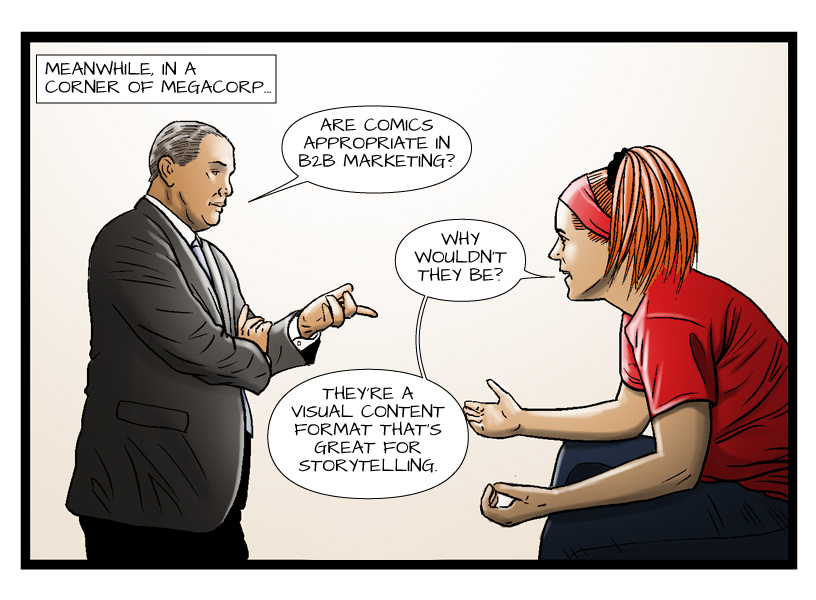
Comics-in-B2B-marketing-header-v1It’s not just Hollywood that’s been finding uses for comic books in recent years. B2B brands have also been using comics, strips and books, to reach new and existing audiences.

In the past few years, we’ve seen B2B-focused companies like Google, Moz, MailChimp and others experiment with using comic books and strips as marketing content. On social platforms such as LinkedIn, business focused comic strips and single comic panels have been finding a new home. We’ve also seen an increase in visual note taking at conferences, where entire seminars are broken down into cartooned bits of information, as was seen at the recent Content Marketing World.

In this episode, Fiona and I examine the potential uses of comics in B2B marketing and give some tips on how you can go about creating your own comics.

Listen now to find out:

  • Which B2B brands are using comics
  • When to use comics in instead of infographics
  • What’s in a good business comic
  • How to write a script for a B2B comic

… and more

Download the episode here (right-click and “save as” to download). Or listen in the player at the top of the page.

You can subscribe to the podcast on iTunes here.

Unsure how long a B2B comic should be? Then read this comic length guide.

Music by Industrial and Marine.

Radix Copycast Episode 17 – Storytelling in B2B, the final frontier

Radix-Copycast-episode-17-header-v1

This episode is an update to and complements episode 3 of the Radix Copycast.

Storytelling seems to be climbing back up the agenda in content marketing, judging by the number of blog posts and articles we’ve seen recently. But what exactly do we mean by storytelling in marketing, and what kind of storytelling techniques can copywriters adopt?

Fiona and I welcome back television comedy writer James Henry (Green Wing, Smack the Pony, Campus), to talk about the structure of classic storytelling and how it can be adapted for content marketing.

Listen now to find out:

  • What ‘storytelling’ actually means in B2B marketing
  • How to create believable, empathetic characters
  • What it means to break down a three-act structure into 60 seconds of video
  • Which of the seven basic plots can be easily applied to B2B marketing

… and more

Download the episode here (right-click and “save as” to download). Or listen in the player at the top of the page.

You can subscribe to the podcast on iTunes here.

Music by Industrial and Marine.

*The stardate was calculated using this website.

Radix Copycast Episode 16 – Can copywriters abandon Microsoft Word?

keyboard-wordprocessing-header-v1

eBooks, infographics, video scripts, scrolling sites: each year seems to increase the variety of B2B content types that need copy. Never before have designers and copywriters been brought so closely together (as discussed in episode 9).

Microsoft Word has been the copywriter’s tool of choice for decades, but is it up to the challenge of modern and increasingly digital copywriting?

I’m joined by Fiona to discuss whether Word still rules, or whether newer writing tools (desktop or cloud-based) are in a position to replace it as the must-have software for copywriters.

Listen now to find out:

  • What copywriters and their clients really need from a word-processing tool
  • Alternatives to Word: could Google Docs, LibreOffice or Scrivener ever rule the roost?
  • Format-specific apps: how do tools like Celtx, Final Draft and Balsamiq stack up?
  • How to bring designers, freelancers, agencies and stakeholders into the same happy fold

… and more

Download the episode here (right-click and “save as” to download). Or listen in the player at the top of the page.

You can subscribe to the podcast on iTunes here.

Music by Industrial and Marine.

We’ve been reading: five useful posts for marketing copywriters

Fast Company – Upworthy’s Headlines Are Insufferable. Here’s Why You Click Anyway

You know the type of headline: You’ll Never Believe What Happened When This One Chicken Crossed This Particular Road. Upworthy headlines are some of the internet’s most clicked and liked, suggesting that the site has hit on a magic formula for attracting attention and piquing curiosity.

This Fast Company article decodes that formula and draws on a number of psychological theories to explain why people find Upworthy’s headlines so irresistible. It’s really useful stuff for any copywriters looking to uncover the secrets to why people click.

(Part of the reason for Upworthy’s success, indicated by one of the commenters to Fast Company’s post, is that they write 25 possible titles for each article – an approach apparently borrowed from The Onion – and relentlessly A/B test, giving them an incredible amount of insight into what kinds of headline work.)

Hubspot Inbound Blog – The 7 Worst Types of Headlines (And How to Fix Them)

One of the many people who find Upworthy-type headlines insufferable (but does she click anyway?) is Hubspot’s Ginny Soskey. In this post, Ginny picks out several examples of egregious approaches to headlines and explains why you really don’t want to be writing them that way.

It’s good, basic advice for headline writers – and bear in mind that almost every piece of advice about headlines can also be applied to email subject lines – and it mostly boils down to “don’t mislead people.” Beyond that, there are some good tips for writing a good headline and some sound links to further articles on the subject.

(With thanks to Hannah Forbes-George of Capture Communications for sharing this on LinkedIn.)

OkDork – Why Content Goes Viral: What Analyzing 100 Million Articles Taught Us

A fantastic article by Noah Kagan Henley Wing, founder of Buzzsumo.com, about the types of content that get shared most, backed up with some excellent data from BuzzSumo and substantiated by similar surveys conducted elsewhere.

While some of it is as you’d expect, there are plenty of surprises too. For example, we all know that people like to share list posts, but did you know that ‘Top 10’ lists outperform lists with any other number of elements? Or that ‘how-to’ posts aren’t as shareable as ‘why…’ posts?

And the biggest and most pleasant surprise for me: it turns out the type of content that gets shared most is long-form content (and I mean really long; we’re talking 3,000-10,000 words). We’ve said before that marketers shouldn’t abandon long-form content in favour of bite-size stuff, and here are the stats to prove it. As the post points out, fewer people are doing long-form, so there’s also less competition.

Harvard Business Review – The Indispensable Power of Story

‘Storytelling’ as a marketing buzzword seems to have taken a bit of backseat in the first few months of 2014, but this and the next article may point to a resurgence of interest in it.

One of the problems I’ve always had with the word ‘storytelling’ in marketing is that people’s interpretations of the word vary so wildly that it’s come to mean almost anything.

In this article, storytelling is taken to mean “using natural, human language to make an emotional connection”. There are some good basic pointers for marketers looking to make their content more personable, including a handy list of possible techniques: “anecdote, mnemonic, metaphor, storytelling, and analogy”, as well as some examples of the kind of ‘human story’ that interests the writer (a venture capitalist) in the companies he comes across.

Fusion Marketing Experience – The art of storytelling in 6 content marketing context questions

“Storytelling is so much more than telling stories,” says J-P De Clerck, somewhat disconcertingly, in this lengthy attempt to describe how storytelling can make marketing content stronger.

Illustrated with quotes from content marketing greats like Ardath Albee, Lee Odden and Doug Kessler, the article gives a tantalising glimpse into what might be possible if we – marketers and copywriters – can get our storytelling right.

(For example: “It’s about making the story so compelling that it elevates perceptions of value and urgency resulting in more qualified leads and faster purchasing momentum.”)

It’s quite long on theory and quite short on practical advice – not to mention real-life examples, or, as you might call them, stories – but it does contain a good list of questions for content marketers to ponder as they seek to improve their storytelling skills.

As an added bonus, it also drew my attention to this fantastic Periodic Table of Storytelling by TV Tropes, which is well worth exploring.

I’m happy to see storytelling climbing back up the marketing agenda, but it would be nice to see more examples of great storytelling in action (especially in the B2B world). If you’ve seen any, let us know!

Get more stuff like this

You can keep up with what’s happening in B2B copywriting by following us on Twitter @radixcom, or signing up for our monthly newsletter.

Other posts you might like

Why everything you thought you knew about subject lines is wrong (maybe)

Storytelling in B2B: more than just beginning – middle – end


Radix Copycast Episode 15 – Six core skills every B2B technology copywriter needs

attributes-b2b-technology-copywriter-v2

In a recent mini-survey on content marketers’ challenges carried out by Velocity Partners, 52% of respondents said great copywriting was one of the hardest skills to find.

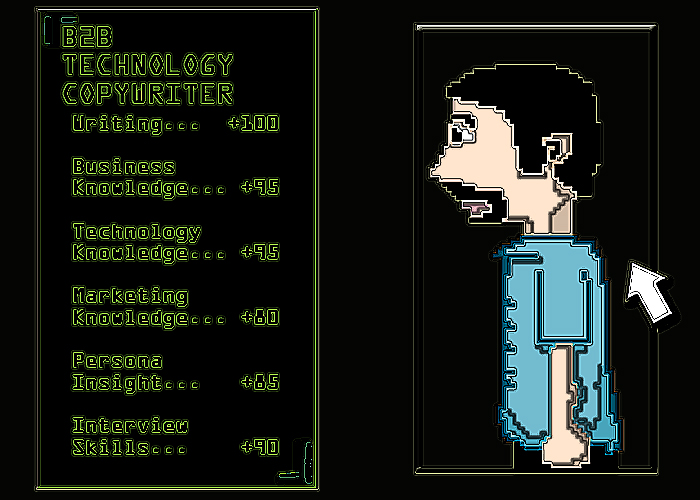
That’s because, as it turns out, the “writing” bit is only part of what makes great copywriting. So, apart from knowing which words should go where, what characterises a great copywriter? In this episode, Fiona identifies six core skills that every B2B technology writer should have.

Plus I’m joined by two of Radix’s copywriters, Kieran and George, to get the inside track on an experimental copywriting technique we’ve borrowed from the software development industry.

Kieran and George explain how “pair copywriting”, based on “extreme programming”, has potential for certain content projects. Listen now to find out:

  • How pair copywriting can improve creativity
  • The challenges presented by pair copywriting
  • What sort of projects it’s best suited to
  • How you can make pair copywriting work for you


Download the episode here (right-click and “save as” to download). Or listen in the player at the top of the page.

You can subscribe to the podcast on iTunes here.

Music by Industrial and Marine.

Radix Copycast Episode 14 – the true value of marketing copy

If 800 words of copy can lead to a $2m deal, you’d think it would be easy to assign a business value to marketing copy. So why do marketers – and copywriters – still treat copy as a commodity?

That’s just one question we try to answer in this episode of the Radix Copycast, for which Fiona and I are joined by Matt Godfrey, Director and Senior Copywriter here at Radix.

We also examine why, in the real world,  it’s largely impractical for copywriters to move away from pricing copy on a per-word or per-hour basis.

But are there some situations where results-based pricing could work for copywriters and their clients? We consider whether marketing automation might make it possible for marketers and writers to monitor how well copy performs, with a view to gauging its true financial value.

Finally we discuss ways in which copywriters can demonstrate the quality and value of their copy, including:

  • Becoming your own content marketer and using your site to showcase your content
  • Establishing a writing niche, either in an industry or content format
  • Asking for feedback from clients to see how your work is performing
  • Showcasing client testimonials and recommendations on your website

Download the episode here (right-click and “save as” to download). Or listen in the player at the top of the page.

You can subscribe to the podcast on iTunes here.

Music by Industrial and Marine.

Further reading

Pam Didner: How Many Content Pieces Can You Create with $1,000?

Radix Copycast Episode 13 – Content marketing: this time it’s personal

Ninety-three percent of B2B marketers now use content marketing. This time we’re looking at why, as more and more marketing content is created, B2B marketers need to consider their audience as individuals in order to ensure their content gets noticed.

Radix-Copycast-episode-13-header-v2

Hyper-specificity, audience relevance, context, personalisation. These are all terms being used by B2B marketers to describe what promises to be one of the top content trends of 2014: a move away from creating generic content for broad audience segments, towards highly-targeted content that is relevant to niche audiences in concrete and specific ways.

But what does this move mean for the copywriters who have to create that highly-targeted, niche content?

Fiona is joined by David McGuire of B2B copywriting consultancy Lungfish to discuss some ways in which copywriters can make their content more relevant to niche audiences, including:

  • The benefits of having a single person in mind when writing
  • How to create accurate personas from audience research
  • Imagining the kind of follow-up conversation we want the copy to provoke
  • How to avoid coming across as “creepy”

Download the episode here (right-click and “save as” to download). Or listen in the player at the top of the page.

You can subscribe to the podcast on iTunes here.

Music by Industrial and Marine.

Further reading

Why B2B Marketing in 2014 must be about Content + Context + Conversation by Bob Apollo

Why marketers are keeping B2B buyer personas in the closet by Ardath Albee

Radix Copycast Episode 12 – B2B copywriting trends of 2013

Welcome to episode 12 of the Radix Copycast, in which we look back at what changed in B2B technology copywriting in 2013. Plus we look at a couple of new trends we see coming up in 2014.

This year we’ve seen several trends emerge in B2B content marketing (and hence copywriting), from the increased use of marketing automation to the popularisation of storytelling. It was also interesting to see what didn’t quite happen as we expected, especially around video marketing.

Fiona and I discuss what changed in 2013 for B2B tech content writers, including:

  • eBooks find their place in the marketing funnel
  • Why reports of the death of the whitepaper were exaggerated
  • The emergence of comic book-style storytelling
  • Why experts and influencers were in high demand

And in the final part of the show, Fiona considers what could be the big (and difficult-to-pronounce) content marketing buzzword of 2014: hyper-specificity.

Download the episode here (right-click and “save as” to download). Or listen in the player at the top of the page.

You can subscribe to the podcast on iTunes here.

Music by Industrial and Marine.

Radix Copycast episode 11 – getting the right writer for your content marketing initiatives

Welcome to episode 11 of the Radix Copycast. This time we’re exploring the importance of getting the right kind of writer for the right kind of content, and we also look at what journalists can bring to content marketing.

B2B marketers are using more content types than ever before, but it’s rare to find one copywriter who is equipped with the full range of copy capabilities. In fact, it’s a must to find the right writer for the right job and you may be surprised by the diversity of skills needed to produce a range of types of content.

Fiona and I are joined by Lindsay Clark – associate writer and experienced business and technology journalist (Computer Weekly, Supply Management, Times, Guardian, FT) – to discuss the different types of writer available, and why journalists in particular make good marketing content creators. Topics we cover include:

  • How to evaluate a potential writer
  • What other skills a good marketing copywriter should have
  • Striking the right balance between in-house and outsourced writers
  • How journalists can help with content marketing initiatives
  • What sort of content projects journalists are best equipped to work on

Download the episode here (right-click and “save as” to download). Or listen in the player at the top of the page.

You can subscribe to the podcast on iTunes here.

Further reading:

Radix Blog: The Seven Types of B2B Copywriter – Which One is Right for You?

Content Marketing Institute: 6 Questions Content Marketers Must Ask Before Hiring a Journalist

Content Marketing Institute: The Makings of an Effective Content Marketing Team: Experts Weigh In

Ann Handley: A Simple Content Marketing Org Chart

Music by Industrial and Marine.

Getting started with B2B podcasting – eight quick tips for first-time podcasters

Podcasts are a great way to get in front of your target audience and show your expertise in your particular sector. And while podcasting can be a lot of fun, getting started can be a bit daunting.

To help you along, we’ve put together a set of eight content tips that will help you to profile your audience, choose the right topics and format, promote your podcast and track the results. It’s based on our experience to date with the Radix podcast – our monthly podcast looking at trends and issues in B2B marketing copywriting.

You may also like to look at our earlier SlideShare on getting the techy side of your podcast right, from choosing where to host it and investing in the right equipment to getting it on to iTunes.