Welcome to episode 11 of the Radix Copycast. This time we’re exploring the importance of getting the right kind of writer for the right kind of content, and we also look at what journalists can bring to content marketing.
B2B marketers are using more content types than ever before, but it’s rare to find one copywriter who is equipped with the full range of copy capabilities. In fact, it’s a must to find the right writer for the right job and you may be surprised by the diversity of skills needed to produce a range of types of content.
Fiona and I are joined by Lindsay Clark – associate writer and experienced business and technology journalist (Computer Weekly, Supply Management, Times, Guardian, FT) – to discuss the different types of writer available, and why journalists in particular make good marketing content creators. Topics we cover include:
How to evaluate a potential writer
What other skills a good marketing copywriter should have
Striking the right balance between in-house and outsourced writers
How journalists can help with content marketing initiatives
What sort of content projects journalists are best equipped to work on
Download the episode here (right-click and “save as” to download). Or listen in the player at the top of the page.
In a recent mini-survey on content marketers’ challenges carried out by Velocity Partners, 52% of respondents said great copywriting was one of the hardest skills to find.
That’s because, as it turns out, the “writing” bit is only part of what makes great copywriting. So, apart from knowing which words should go where, what characterises a great copywriter? In this episode, Fiona identifies six core skills that every B2B technology writer should have.
Plus I’m joined by two of Radix’s copywriters, Kieran and George, to get the inside track on an experimental copywriting technique we’ve borrowed from the software development industry.
Kieran and George explain how “pair copywriting”, based on “extreme programming”, has potential for certain content projects. Listen now to find out:
How pair copywriting can improve creativity
The challenges presented by pair copywriting
What sort of projects it’s best suited to
How you can make pair copywriting work for you
Download the episode here (right-click and “save as” to download). Or listen in the player at the top of the page.
You know the type of headline: You’ll Never Believe What Happened When This One Chicken Crossed This Particular Road. Upworthy headlines are some of the internet’s most clicked and liked, suggesting that the site has hit on a magic formula for attracting attention and piquing curiosity.
This Fast Company article decodes that formula and draws on a number of psychological theories to explain why people find Upworthy’s headlines so irresistible. It’s really useful stuff for any copywriters looking to uncover the secrets to why people click.
(Part of the reason for Upworthy’s success, indicated by one of the commenters to Fast Company’s post, is that they write 25 possible titles for each article – an approach apparently borrowed from The Onion – and relentlessly A/B test, giving them an incredible amount of insight into what kinds of headline work.)
One of the many people who find Upworthy-type headlines insufferable (but does she click anyway?) is Hubspot’s Ginny Soskey. In this post, Ginny picks out several examples of egregious approaches to headlines and explains why you really don’t want to be writing them that way.
It’s good, basic advice for headline writers – and bear in mind that almost every piece of advice about headlines can also be applied to email subject lines – and it mostly boils down to “don’t mislead people.” Beyond that, there are some good tips for writing a good headline and some sound links to further articles on the subject.
(With thanks to Hannah Forbes-George of Capture Communications for sharing this on LinkedIn.)
OkDork – Why Content Goes Viral: What Analyzing 100 Million Articles Taught Us
A fantastic article by Noah Kagan Henley Wing, founder of Buzzsumo.com, about the types of content that get shared most, backed up with some excellent data from BuzzSumo and substantiated by similar surveys conducted elsewhere.
While some of it is as you’d expect, there are plenty of surprises too. For example, we all know that people like to share list posts, but did you know that ‘Top 10’ lists outperform lists with any other number of elements? Or that ‘how-to’ posts aren’t as shareable as ‘why…’ posts?
And the biggest and most pleasant surprise for me: it turns out the type of content that gets shared most is long-form content (and I mean really long; we’re talking 3,000-10,000 words). We’ve said before that marketers shouldn’t abandon long-form content in favour of bite-size stuff, and here are the stats to prove it. As the post points out, fewer people are doing long-form, so there’s also less competition.
‘Storytelling’ as a marketing buzzword seems to have taken a bit of backseat in the first few months of 2014, but this and the next article may point to a resurgence of interest in it.
One of the problems I’ve always had with the word ‘storytelling’ in marketing is that people’s interpretations of the word vary so wildly that it’s come to mean almost anything.
In this article, storytelling is taken to mean “using natural, human language to make an emotional connection”. There are some good basic pointers for marketers looking to make their content more personable, including a handy list of possible techniques: “anecdote, mnemonic, metaphor, storytelling, and analogy”, as well as some examples of the kind of ‘human story’ that interests the writer (a venture capitalist) in the companies he comes across.
“Storytelling is so much more than telling stories,” says J-P De Clerck, somewhat disconcertingly, in this lengthy attempt to describe how storytelling can make marketing content stronger.
Illustrated with quotes from content marketing greats like Ardath Albee, Lee Odden and Doug Kessler, the article gives a tantalising glimpse into what might be possible if we – marketers and copywriters – can get our storytelling right.
(For example: “It’s about making the story so compelling that it elevates perceptions of value and urgency resulting in more qualified leads and faster purchasing momentum.”)
It’s quite long on theory and quite short on practical advice – not to mention real-life examples, or, as you might call them, stories – but it does contain a good list of questions for content marketers to ponder as they seek to improve their storytelling skills.
As an added bonus, it also drew my attention to this fantastic Periodic Table of Storytelling by TV Tropes, which is well worth exploring.
I’m happy to see storytelling climbing back up the marketing agenda, but it would be nice to see more examples of great storytelling in action (especially in the B2B world). If you’ve seen any, let us know!
Get more stuff like this
You can keep up with what’s happening in B2B copywriting by following us on Twitter @radixcom, or signing up for our monthly newsletter.
eBooks, infographics, video scripts, scrolling sites: each year seems to increase the variety of B2B content types that need copy. Never before have designers and copywriters been brought so closely together (as discussed in episode 9).
Microsoft Word has been the copywriter’s tool of choice for decades, but is it up to the challenge of modern and increasingly digital copywriting?
I’m joined by Fiona to discuss whether Word still rules, or whether newer writing tools (desktop or cloud-based) are in a position to replace it as the must-have software for copywriters.
Listen now to find out:
What copywriters and their clients really need from a word-processing tool
Alternatives to Word: could Google Docs, LibreOffice or Scrivener ever rule the roost?
Format-specific apps: how do tools like Celtx, Final Draft and Balsamiq stack up?
How to bring designers, freelancers, agencies and stakeholders into the same happy fold
Storytelling seems to be climbing back up the agenda in content marketing, judging by the number of blog posts and articles we’ve seen recently. But what exactly do we mean by storytelling in marketing, and what kind of storytelling techniques can copywriters adopt?
Fiona and I welcome back television comedy writer James Henry (Green Wing, Smack the Pony, Campus), to talk about the structure of classic storytelling and how it can be adapted for content marketing.
Listen now to find out:
What ‘storytelling’ actually means in B2B marketing
How to create believable, empathetic characters
What it means to break down a three-act structure into 60 seconds of video
Which of the seven basic plots can be easily applied to B2B marketing
… and more
Download the episode here (right-click and “save as” to download). Or listen in the player at the top of the page.
Twitter can be a powerful channel in B2B technology marketing, second only to LinkedIn. But success depends heavily on your copy – and with only 140 characters or fewer to play with, it’s a big challenge for a writer to create something that’s on-message, eye-catching, and compels people to click or share.
I’m joined by John and Steve to discuss what copywriters can do to make sure their tweets punch above their weight, and whether there are some elements to the social platform that simply don’t best serve a B2B audience.
Listen now to find out:
How to be succinct on Twitter
The art of hashtags
Ways to encourage people to click on links
When it is and isn’t okay to use @ mentions
… and more
Download the episode here (right-click and “save as” to download). Or listen in the player at the top of the page.
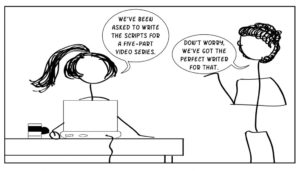
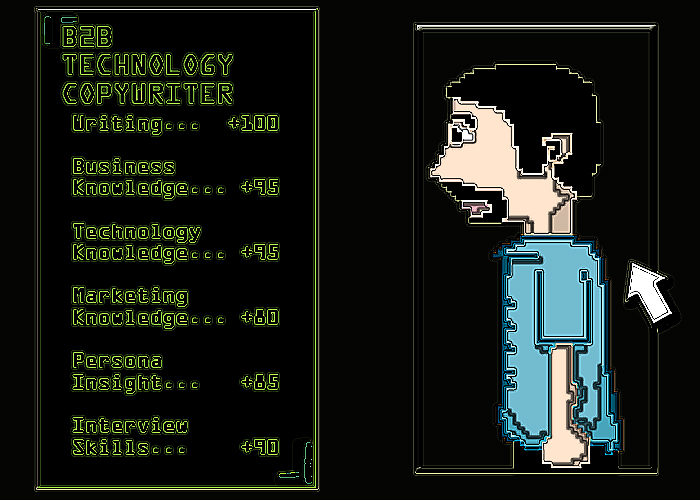
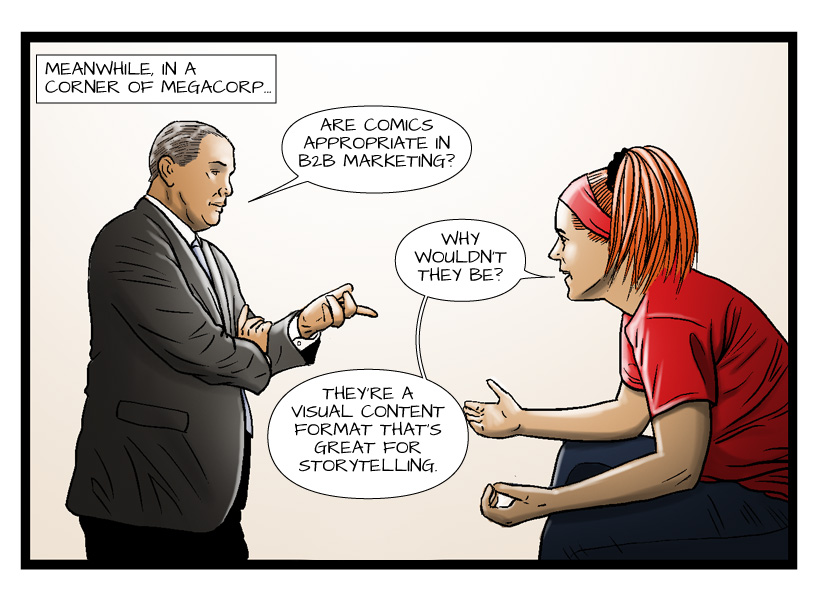
It’s not just Hollywood that’s been finding uses for comic books in recent years. B2B brands have also been using comics, strips and books, to reach new and existing audiences.
In the past few years, we’ve seen B2B-focused companies like Google, Moz, MailChimp and others experiment with using comic books and strips as marketing content. On social platforms such as LinkedIn, business focused comic strips and single comic panels have been finding a new home. We’ve also seen an increase in visual note taking at conferences, where entire seminars are broken down into cartooned bits of information, as was seen at the recent Content Marketing World.
In this episode, Fiona and I examine the potential uses of comics in B2B marketing and give some tips on how you can go about creating your own comics.
Listen now to find out:
Which B2B brands are using comics
When to use comics in instead of infographics
What’s in a good business comic
How to write a script for a B2B comic
… and more
Download the episode here (right-click and “save as” to download). Or listen in the player at the top of the page.
B2B and emotion aren’t often mentioned in the same sentence, but next month these strange bedfellows form the theme of the B2B Marketing conference.
And last year they were the subject of a major survey by CEB and Google, which revealed that emotion plays a surprisingly big role in B2B buying decisions.
So does this mean it’s time to start pulling on the heartstrings of B2B buyers? If so, how do you gauge when and where to get emotive in copy? And is it possible to take things too far?
Fiona is joined by David McGuire, MD of the B2B copywriting agency Lungfish, and associate writer here at Radix, to talk about why and how B2B marketers can best use emotion in marketing content.
Listen now to find out:
Why B2B marketing needs to get emotional
Which emotions marketers and copywriters should appeal to
How to bring more emotive language into your copy
Examples of B2B brands making great emotional connections
… and more
Download the episode here (right-click and “save as” to download). Or listen in the player at the top of the page.
In 2014 we’ve seen predictions of an impending content shock, an increased appreciation for well written copy, stirrings of discontent with tried and tested formats (like eBooks) and a lot more play out in B2B marketing.
Overall, 70% of B2B marketers are creating more marketing content than they were a year ago. And as you’ll hear when we discuss the continued adoption of marketing automation – it definitely seems like brands are producing more content to feed their automation machines. But is this content always informative and interesting, and created with the customer in mind?
In this episode, Fiona and I analyse 10 copywriting and content marketing trends that have rocked B2B this year. And not all of them may be with us in 2015.
Listen now to find out:
How native advertising turned audiences against it
What Google’s continuing algorithm changes mean for copywriters
Why better storytelling techniques mean better B2B videos
Why more marketers are appreciating the value of good copy
The benefits of customer focused content
… and more
Download the episode here (right-click and “save as” to download). Or listen in the player at the top of the page.
We copywriters are sensitive souls. If you’re like me, your heart sinks when you’ve put a huge effort into writing something, only to have your client come back with seemingly-unhelpful feedback like “It’s OK, but could you just make it a bit more sparkly?”
For “sparkly” you could also substitute “punchy”, “snappy”, “dynamic”, “energetic”, “vibrant”, “compelling” – or any of a huge number of adjectives that clients tend to use when they feel the existing copy isn’t up to scratch – but don’t quite know (or don’t have time) to articulate what needs to be changed.
So what does a client actually *mean* when they say they want your copy to be “more sparkly”? In my experience, it usually means you need to do one or more of these things:
1) Use shorter words and sentences
In B2B we’re usually promoting complex technologies and services that solve knotty business problems. That means we often end up writing very long sentences, using long, multi-syllabic words, to frame the business issue or to explain what the product or service does.
And while those sentences may be technically accurate, they’re not much fun to read. When you only have a microsecond to get your reader’s attention, an opening gambit like: “In today’s difficult economic times, logistics managers are under increasing pressure tominimise transportation costs while ensuring faster order fulfilment times” isn’t really going to set pulses racing or leave your audience hungering for more.
It may be true, but it’s the kind of jargon-heavy, clichéd opening that a) has been written a thousand times before, and b) tries to say a lot of things in a short space, and consequently ends up saying nothing exciting or inspiring.
How to make it sparkle: Don’t try to say everything at once. Use shorter words and sentences. Pick a hot issue and lead with it. Talk to your audience directly (see tip 2 below). Appeal to their emotions. Make a bold statement. Lead with a question. Write in normal, conversational language. Lighten up a little bit!
Here’s a great example of sparkly copy from Xero, the cloud accounting system for small businesses:
Xero’s copywriters don’t waste time here telling business owners what they already know (“In today’s difficult economic times…”). They hit on a single issue (you need to see your cashflow in real time), use everyday conversational language to show how they help you do it, and add a bit of sparkle with three short, emotive adjectives, one of which is a little bit cheeky and unusual: “simple, smart and occasionally magical”.
BONUS TIP: Most of us have been tempted at some point to start a sentence with “In today’s difficult economic times…” or a variant of it. My tip for overcoming this is: write it, then write what you were going to write after it, then go back and delete “In today’s difficult economic times”. I can guarantee your sentence will be shorter, less clichéd and will have exactly the same impact.
2) Write as though you’re talking to a real person
One of the big problems with B2B copy is that we often don’t have a clear idea of who we’re writing for. The brief may say that this ebook is for HR directors in midsize enterprises, but if you’ve never met an HR director from a midsize enterprise, it’s difficult to imagine what that person might be like. And if you can’t readily imagine them, it’s hard to know what makes them tick, or what tone to take with them. So more often than not, we’ll play it safe and use a formal, generic, “businessy” style, which doesn’t exactly fire wild enthusiasm in the heart of Debra Perkins, head of HR at Anyco.
How to make it sparkle: Get to know some real-life HR directors. If not in actual real life, then at least check out some LinkedIn Groups and see how they talk and what they talk about, read interviews in trade magazines or revisit some case study interviews.
Check out LinkedIn Groups to see how real HR executives talk to one another.
If you have the time and the opportunity, get to know some HR directors in person, maybe by attending an industry event, chatting to a few people and paying attention to how people talk about their jobs, their aspirations and their frustrations. Then bring the tone, flavour and vocabulary of those real conversations back into your copy. Rather than sounding like a corporate copy-bot, you’ll sound like a real human being, talking to other human beings about things that matter to them.
3) Use real-life examples
A lot of B2B copy is dull because it tells rather than shows. “Our end-to-end automation solution will significantly reduce your procure-to-pay cycle” is one way of talking about how good your software is, but it’s unlikely to have your audience springing from their swivel chairs in excitement.
How to make it sparkle: Cut the jargon and show what this means in the real world. “You can get new widgets on to your production line while your competitor is still looking around for a supplier”. Better still, use a real-life anecdote: “One company we worked with managed to claim £270,674 in early-payment discounts in the space of five months – more than covering the cost of the software.”
Showing, rather than telling – and using little stories to do so – is a great way to bring your copy to life and make it relevant and interesting to your audience.
Even dense, technical copy can be lightened up with real-world examples and anecdotes.
4) Use metaphors and visual imagery
Lots of us on the B2B side of copywriting – myself included – think of ourselves as “explainers”, skilled in translating complex technical ideas into plain, understandable language.
(For more on the different types of B2B copywriter, see our previous post).
The problem is that plain, down-to-earth language can lack sparkle because its aim is to clarify, not to entertain. But in a world stuffed with B2B content, drier, more academic-style copy will no longer stand out – especially not at the top of the funnel where you’re looking to capture attention for the first time.
How to make it sparkle: A great skill for “explainer”-style copywriters to learn is using metaphor, simile, analogy, cultural references and visual imagery to add sparkle to copy. If you can show what you’re talking about through the use of an original metaphor, your copy will make a more immediate impact and stand out far more – especially if you can work hand in hand with a designer to reinforce the idea.
This ebook brings a cheeky infernal metaphor to what could otherwise be quite a staid topic.
In truth there are many ways to make your copy sparkle, and it always pays to look around and learn from the best. But hopefully these four tips will set you on the right path to producing sparkly copy your clients will love.
Need someone to make your copy sparkle?
We’ve a team of copywriters ready with glitter pots in hand, so get in touch with us today.
Our newsletter
If you’re interested in...
×
If you’re interested in…
How to get high-quality content done, on budget and on time
B2B tech marketing content creation trends, advice, and resources
Insights from our clients, colleagues, industry partners, and experts
…this is the newsletter for you.
We promise not to send you spam. And we won’t share your details with anyone else.









 It’s not just Hollywood that’s been finding uses for comic books in recent years. B2B brands have also been using comics, strips and books, to reach new and existing audiences.