Podcast 56: 2017 – a content odyssey (witness B2B marketing’s latest evolutionary leap)

The biggest B2B marketing news of the last 12 months? I’d like to say it was the reclassification of case studies as content by CMI and Marketing Profs – after one plucky content writing agency so eloquently called them out for dropping the format from their annual state of B2B content marketing report.

I’d like to say that… but in truth, the forces at play in B2B marketing this year have been even bigger than our ego. We’ve seen:

  • The triumph of quality over quantity (for now)
  • A battle between data-driven content and creativity
  • A new willingness to invest in deeper, longer form content

And with business-to-business content continuing to evolve, whether it’s through technology (here’s looking at you, VR) or legislation (“Give me a G! Give me a D! Give me a P! Give me an R! Give me a massive new challenge for technology to solve!”) 2018 is shaping up to be even more “exciting” than 2017.

Join Fiona, David and I as we discuss the big surprises of the past year in B2B copywriting and marketing, as well as what we really, really hope to see in 2018.

Listen now to discover:

  • How global politics impacted agencies everywhere in 2017
  • What’s going to replace B2B ebooks
  • How account-based marketing could all go Pete Tong
  • What the current increase in blog lengths really means
  • Why VR fits so naturally in the bottom of the funnel
  • …and more

Plus we’ve got expert insights from:

Evelyn van Kelle (SIG)

John Espirian

How to listen >>

You can download the episode here (right-click and “save-as” to download). Or stream the episode in the player at the top of the page.

(Or you can subscribe to the podcast on iTunes here. Alternatively, add our RSS to your preferred podcast player.)

Credits:

Intro and outro music by Industrial and Marine.

How long should a blog be?

Blogs began life as “weblogs:” personal pages people used to catalogue their experiences. An intimate, personal and often raw format, businesses quickly began trying to capture this same kind of energy in their own blogs.

But while you can write about how your day went in a few hundred words, you need a lot more page real estate to get into a meaty business technology topic.

So how long can a business blog be before it overstays its welcome? And how long should a blog be to engage your audience?

How long is a piece of string?

Other B2B content formats tend to have strictly defined layouts and lengths. We all have a rough idea how long an email or social media post can be before it becomes unbearably long. And though many marketers often see white papers and ebooks as interchangeable (here’s a guide to help you tell the difference), the general consensus is that these are longer-form pieces of 1,500 words or more.

But the blog? The blog can be a wide range of lengths – and there’s not a lot of agreement on what kind of word count is best for engaging your audience.

What does the research say?

When it comes to engagement, a quick Google will yield a lot of opinion pieces, articles and scientific-looking tables about what size of post is best.

One type of opinion you’ll see regularly is the idea that in the smartphone age attention spans are too low for you to hold attention after a certain number of words. And it seems the blogging community has taken this message to heart, with WordPress CEO Matt Mullenweg claiming that the average WordPress post is just 280 words long.

So, is brevity the soul of blog engagement? The research would beg to differ.

Buffer Social’s study found that blogs got the best engagement at 1,600 words. Other common stats support long-form blogs as better for engagement, and search ranking:

  • On average, top ranked searches have 2,416 words
  • Long content outperforms short-form posts by 40.54%

Despite the numbers being fairly convincing, Rand Fishkin of Moz says we should be careful about taking this data at face value.

After all, the data leaves a lot of questions unasked. Specifically, when it comes to how different length posts rank in search, we need to ask:

  • What set of keywords does this apply to?
  • Will the keywords I use see similar results?
  • Is correlation the same as causation?

I’ll leave the first two questions to the SEO experts out there, but when it comes to correlation and causation: it’s safe to say there’s very little. While long content may be more engaging and rank higher, it doesn’t do those things just because it’s long. If I wrote the word “blob” 600 times, that would be no more or less readable and engaging than if I wrote it 1,500 times.

The depth-length correlation

Long posts tend to engage and rank better, but that’s not necessarily because they’re long. In general, it’s because longer posts will go into greater depth on a topic and (hopefully) be better researched. And we all know a little research and depth goes a long way to creating better content.

The key is in that depth, though. The longer word count merely allows for it. In fact, I’d go as far as to say word count is only earned once the depth is there. Radix’s own creative director David McGuire hit the nail on the head in a recent LinkedIn post, saying “a longer blog post isn’t necessarily better; it just has more words.”

If you were to chart depth against word count on a poorly drawn WordArt graph, it might look something like this:

To summarise this wonky majesty: if you have a lot of depth, you can have a lot of words without turning your blog into a shallow load of waffle.

It’s time to earn your word count

So, the next time you look at an in-progress blog and ask “is this the right length?”, think first about whether it has the right depth to justify that length.

If you’re just putting out a quick opinion piece on a topic, 400 words may be enough. If you’re really going to town on the research though, give yourself permission to break the 1,500-word barrier.

For more copywriting tips, tricks and blogs of varying length, subscribe to our monthly insights email.

Robotics and AI: coming soon to a ship near you

You don’t need me to tell you how “technology is forever changing”, or go one better and say “it’s the next big thing”. But the kind of technology we write about on a day-to-day basis is probably not the kind of stuff the average person is aware of.

But why not? Technology – specifically enterprise tech – has a massive impact on all of us. It’s working its way into every aspect of our lives and every industry on the planet. And that’s the overarching point I took away when I went to the recent Marine-i conference here in Penryn: it’s an industry undergoing massive transformation, but despite potentially world-changing advances, most people don’t even know it’s happening.

We don’t often write about marine technology, so I’ve collected what I think are the biggest considerations in the industry today, and going forward.

Autonomous systems

Many industries are pumping a lot of resources into automated and autonomous (the difference being something pre-set happening versus a machine thinking and responding on its own) technology. But the marine sector is lagging behind most other land-based industries in terms of adoption. Chiefly, this is because the environments the tech has to work in are highly challenging and unforgiving.

For example, most offshore wind farm maintenance is still carried out by humans – either dangling from ropes on a wind turbine, or diving to the sea bed. The upshot of this is that, on new wind farms, a survey needs to be carried out on the entire site, every six months…for five years. And the cost of each survey? Well, let’s just say you won’t get much change from £400,000.

And that’s not even taking into account the weather. Andy Kay of Catapult explained that a lot of the time, maintenance crews are stuck on shore, waiting for good weather conditions so they can carry out their work. And for every minute they’re waiting, money is draining from the kitties of the wind farm owners.

That’s not to say companies aren’t using robots to carry out this kind of work – they are. But most still rely on surface vessels for support. Even unmanned aerial vehicles (UAVs) still require a local operator sat on a ship below the turbine.

The good news is, times are changing. The change may not be as quick as people had hoped, but it’s happening. For instance, there’s research going into autonomous maintenance systems for wind farms – modules that are permanently resident and require little human interaction. The question is: who or what maintains the maintenance machinery? But, it’s a step in the right direction.

Data: friend or foe?

It was surprising to me (perhaps naïvely) that the first time the word data was mentioned in the conference was in the fourth presentation by Phil Johnstone of Autonaut. I say surprising, because as B2B copywriters most of our work one way or another relates to data, and how to use it – because most things tech-related produce (metaphorical) tonnes of the stuff.

Phil’s point was what do you do with all the data you’re gathering, and how do you extract insight from it? His product, a wave-propelled unmanned surface vessel, enables automated research to be carried out at sea, using self-sustaining energy. And because it has a satellite connection, all the data it gathers can be transmitted back to shore in near real-time.

But where do you store all this data? More importantly, how do you find the valuable insights hidden inside it?

If the marine sector is to truly succeed in automating dangerous or costly processes, the issue of data capture, storage, processing and analysis will need to be tackled first.

Autonomous cars are the future, but autonomous ships are about to set sail

I’m not sure why I was surprised by this revelation either. Yes, in certain bodies of water such as the English Channel, I can see how relatively new autonomous technology could cause havoc with manned vessels. But out in the wide ocean? It makes perfect sense.

And the implications for safety could be revolutionary. Working at sea is one of the most dangerous professions in the world – with ships’ crews being particularly at risk from the elements, heavy machinery and piracy (and they could be days, or even weeks away from a hospital). With an autonomous ship, there’s no crew.

The first autonomous cargo ship is due to start operations in 2018, delivering goods between ports in Norway. What’s more, it’s battery powered, so aside from improved safety, it will also save on carbon emissions and cut about 90% off the operating costs of an equivalent “normal” vessel.

As an answer to combat increasing commercial pressures, autonomous ships are an ideal solution. But of course, there’s then the problem of what happens to the jobs of thousands of professional seafarers who spend most of their working lives on ships.

No ifs, no buts – marine robotics and automation have landed

Ten years ago, the industry was perhaps touching on the subject of automation and robotics, but it was very much pie in the sky stuff. Something for the distant future perhaps, along with food pills and colonisation of the moon. Even five years ago, people weren’t really talking about it as a commercially viable proposition.

Suddenly though, people aren’t just talking about it, they’re doing it. And full-scale commercial robotics and automation solutions are now available to buy, and are even being developed to suit individual applications.

There’s perhaps been some resistance to automation in the industry on the grounds of job losses. But from what I saw at the event, like so many of the other automation tech we write about, it will enable human workers to focus more on making the industry bigger and better. While saving countless lives, automation could save lot of cash which could be better spent on training people with the skills they’ll need in the digital future of marine sector.

Reach your audience

If you’ve got an exciting new technology and you need great copy to let the world know about it, get in touch. We’d love to hear from you.

Radix is looking for a junior account manager

Radix is a fast-growing, specialist copywriting agency, based in beautiful riverside offices in Penryn, Cornwall, with a client base that stretches from London to California and sometimes beyond.

The role

We’re looking for an extremely organised, customer-focused junior account manager who can act as first point of contact and ongoing relationship manager for a group of Radix clients.

Reporting to our Operations Director, you’ll handle the scheduling and project management for every writing project that comes in from your clients, working with a team of in-house writers and editors.

In the course of a typical day you will:

  • Act as first point of contact for clients requesting work
  • Advise clients on our availability
  • Agree costs and delivery schedules
  • Determine the right writer or team for the job
  • Schedule or reschedule the work in the team’s diaries
  • Liaise with and manage external writers and designers as needed
  • Ensure the timely delivery of the work
  • Provide regular updates to your clients
  • Keep our project management system (ProWorkflow) up to date with your project activity
  • Work on developing great relationships with Radix clients

You’ll also attend client meetings, usually in London and the Thames Valley, which sometimes involve some pretty early starts and long train/car journeys.

Who we are

Radix is a copywriting agency based in Penryn, Cornwall.  We work exclusively in the enterprise technology sector (that’s IT to you and me), and our clients are a mix of technology firms and their marketing agencies. We write for a range of major global brands as well as smaller, niche brands.

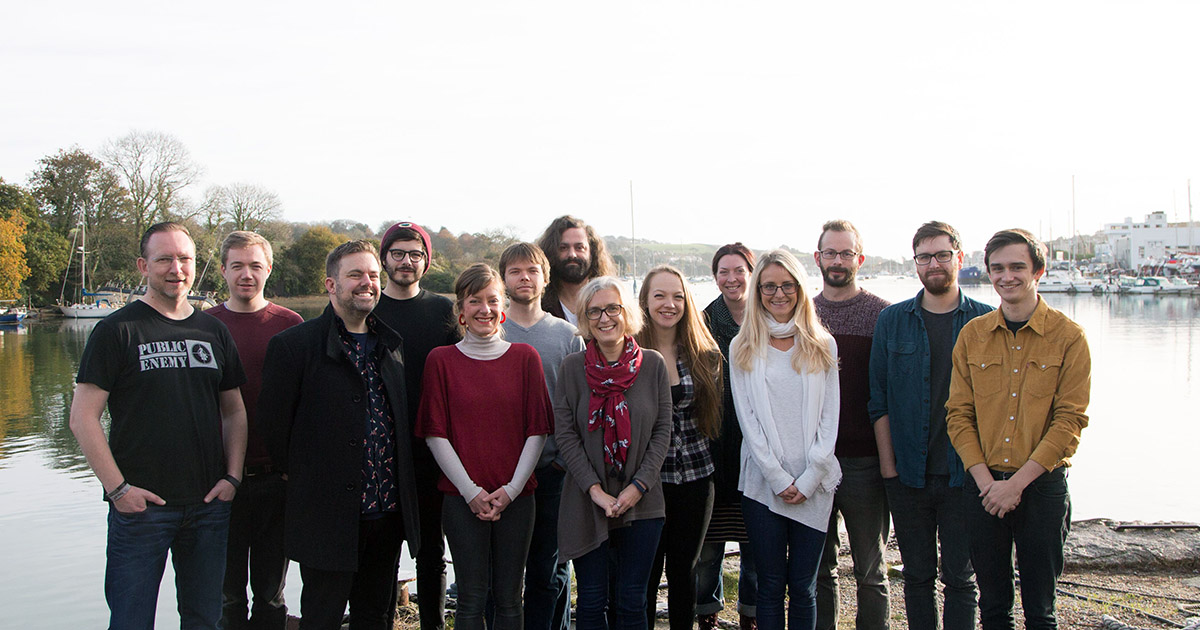
We strive to be the best copywriters in the tech industry, worldwide, and our growing international client base reflects the care, pride and skill we put into every job. Our friendly team of 14 people is based in newly-refurbished, eco-efficient riverside offices in Penryn’s Jubilee Warehouse.

Who you are

You are someone who enjoys building and maintaining good client relationships. You’re a real team player – you’ll need to work very closely with your team to get the job done. You’re extremely organised, unflappable under pressure and happy working at a fast pace.  You’re a multi-tasker who takes pride in delivering a great service to your internal team and external clients.

You’re happy talking to clients at all levels of seniority, and have the confidence to push back and negotiate deadlines with clients when things get busy!

Your skills and experience

Ideally you’re someone with 1+ years’ experience in a client facing role in a busy creative or marketing agency. If this isn’t you, but you do have extensive customer-facing experience in a high-pressure environment, we’re keen to hear from you.

You’ll be comfortable with Microsoft Office (Word, Excel, Outlook) and quick to pick up new applications.

You don’t need copywriting skills or a deep knowledge of the IT industry or enterprise technology to excel in this role, but a genuine interest in business and technology would be a definite advantage.

As our client base is international, taking in many nationalities, experience of overseas travel or working with people from different countries and cultures would be another advantage.

Hours

This is a full-time role, 37.5 hours per week, Monday-Friday. There is some travel as part of the role, typically 1-2 trips to London/ the South-East per year.

Salary

£21,000 plus annual profit-share bonus and private health cover.

How to apply

To apply for this role, please send your CV with a covering letter explaining why you’d be ideal for this role, to:

Sophie Reynolds
Operations Director
Radix Communications Ltd
Studios H and I
Jubilee Warehouse
Penryn
Cornwall TR10 8AE
Email: [email protected]

Deadline for applications:  12th January 2018
Interviews:  w/c 22nd January 2018
Start Date: 5th March 2018

Podcast 55: what did we learn at Copywriting Conference 2017?

Marketers have no shortage of conferences where they can meet like-minded professionals, get inspiration, and spot the latest industry trends. But a conference dedicated to copywriting? That’s not something you see every day.

Attending a conference can sometimes be a risk, as the return on investment’s not always certain. But Copywriting Conference 2017 struck the sweet spot between being informative and entertaining… very entertaining.

In this episode of Good Copy, Bad Copy – and under Emily’s guidance – David, Katy, Ben and I share our impressions of the event and our key takeaways. (Spoiler alert: if you’re here to get the dirty on the bad speakers, there were none. Sorry.)

Listen now to discover:

How to listen >>

You can download the episode here (right-click and “save-as” to download). Or stream the episode in the player at the top of the page.

(Or you can subscribe to the podcast on iTunes here. Alternatively, add our RSS to your preferred podcast player.)

Credits:

Intro and outro music by Industrial and Marine.

Good news for clients: we’re raising our blog writing prices

If you heard a worldwide intake of breath at the start of November, it may well have been the Radix client base, opening our latest B2B copywriting price list.

Alongside the expected incremental increase (it’s our first price realignment for a couple of years, after all), there’s one big change that might seem surprising. We now list no fewer than six different kinds of blog post. And their average price has increased significantly.

That’s because:

  1. We’ve added new, longer blog post options
  2. We’ve built in extra time into our other posts too.

Assuming our clients want to see a return on their investment, that’s a very positive thing. Because the evidence is clear – longer and better thought-out blog posts get far better results.

[Public service announcement: there now follows an explanation of the changing role of B2B blogging, and the correlation between blog length and results. It’s valuable stuff, but if you want to skip straight to the price list, that’s fine too.]

To get more out, we gotta put more in

We haven’t shuffled our pricing on a whim. We’ve done it because B2B blogging has changed dramatically. (In fact, it’s been changing for a while: we talked about it in our podcast in early 2016, and again this April.)

Marketers are no longer viewing blog posts mostly as pile-em-high-sell-em-cheap web filler to be consumed by search engine spiders – and, to be frank, nobody else. Which is great news for us, because we’ve never written that way and it was a bit soul-destroying to compete with those who did.

But partly thanks to search algorithm changes rewarding quality (nice work, Google), blog posts have now taken their rightful place as a versatile content marketing asset in their own right. And that means they need to inform. To engage. To entertain. Because if a blog post is going to succeed, it needs to deliver genuine value to the reader.

But creating that value takes work. It takes research, and talking to subject matter experts. It takes planning, and thought. It takes editing and redrafting. It takes time.

If charging a little more for a blog post means we can put in that bit more time and effort, then the end result will be more engagement for our clients – and content that actually delivers against their business objectives. Which is why we’re all here, right?

Blog posts: the Very Hungry Caterpillar of content

Often (though not always), all that extra time, thought and research translates into more words. Undoubtedly, blog posts across the board are getting longer – and working better for it.

For the last four years, Andy Crestodina at Orbit Media has shared the results of an annual survey into bloggers’ work practices – and, crucially, their results. Every year, the trend moves further towards fewer, longer posts and more time – with better results.

This year’s findings continue the trend:

  • The average blog is now 1,142 words long (88 up on 2016 – and 334 more than 2014)
  • 2,000 word blogs are now almost as common as those with fewer than 500
  • Typical blog length has a marked correlation with strong results

Just 19.9% of bloggers with a typical post length of 800-1000 words report “strong results”. Where the average is over 2,000 words, it’s 56.3%.

Orbit Media, 4th Annual Blogger Survey

Andy’s not alone. In his article How to decipher the DNA of winning content, LinkedIn’s Jason Miller describes how his team partnered with Buzzsumo to analyse 400,000 content marketing posts on major social media networks. Among other things, they learned:

  1. The average number of links and shares both increase as a post gets longer
  2. The “sweet spot” for a technology post is now between 1,000 and 2,000 words.

To reflect that, one of the new kinds of blog post we’ve added to our price list this year is a 1,800-2,000-word colossus. It allows a genuinely informative deep dive into a topic – but in terms of the writing and research effort we put in (and, arguably, the value it gives the marketer) it’s broadly equivalent to an ebook.

We price the post accordingly – which obviously increases the notional “average blog price” overall.

It’s not about length; it’s about depth

Let’s be clear: nobody’s suggesting that longer blog posts are automatically more effective, per se. There’s no magic in the word count (except for a slight improvement in the ability to catch long-tail Google searches, perhaps).

But where a blog post has to work hard amid the grey goo of identikit content marketing, that little bit more research, thought and explanation can be a big help. The blog post that’s not afraid to go deep is one way to stand out, and deliver actual value to the reader – and if you want to demonstrate your expertise, instead of just talking about it, it works for that too.

(There’s also an undeniable, “I’m so serious” cachet around sharing a long read on social media, isn’t there?)

“If you have something original and valuable to say, take the space to say it with meaning. Longer content often serves as a sign of relevance, authority, and value.”

Jason Miller, Group Manager of Global Content and Social Media Marketing, LinkedIn

Yes, our price list really does include six types of blog post. Wanna see?

We’re a wee bit unusual as copywriters go, in that we give all our clients a price list for the kinds of content we’re asked to write most often. It helps our direct clients to keep control of their budgets, and agency ones to give accurate quotes to their own clients in turn.

(That’s not to say you can’t have a bespoke quote if the thing you want is not on the list. But for most of the work we do, it’s a very handy guide.)

As well as adding new, longer and more in-depth options, our price list now includes an option for writing up an event or webinar – since that’s an increasingly popular way for our clients to extend the reach and long-term return from their event management investment.

Broadly, then, here are the six kinds of blog post our clients usually want:

Blog post type 1: blog to promote existing asset (600-800 words).

A straightforward blog post, promoting an existing content asset (typically an ebook, white paper or video). It acts as a teaser, sharing some of the information from the asset but with the call to action to download the asset to get the full story.

The blog is written with the aim of amplifying the reach of the asset and driving registrations / downloads. For that reason, clients often ask us to add a blog of this type to an ebook or white paper commission.

Blog post type 2: topical comment/opinion post (800-1,000 words)

A post that sets out the client’s opinion on a current topic or trend, or which uses a topical story as a hook to talk about the client’s product or service area. It’s usually ghostwritten for the client’s subject matter expert – in an appropriate voice – based on an interview.

This type of post works well on LinkedIn, to spark conversation and engagement with people in the spokesperson’s extended network.

Blog post type 3: re-purposing asset with additional content (800-1,000 words)

This type of post takes an existing content asset as its basis, but seeks to flesh it out with additional research and/or a briefing call with the client. The aim of this type of post is to create interest in a particular topic, which in turn is designed to encourage the reader to download the asset once their interest has been piqued.

The additional information is there to signal to Google that this is rich, quality content – or can enable us to zoom in on one aspect. In this way, it’s possible to atomize one tentpole content asset into a whole series of engaging standalone posts.

Blog post type 4: write-up of an event or webinar (800-1,000 words)

This type of post is designed to amplify and extend the reach of a client’s event or webinar. Typically, the writer will attend the event or watch the webinar, and write a summary post highlighting the main points of the session, with a call to action to find out more.

For large conferences or multi-session events, we often write several blog posts, based on sessions the client chooses.

Blog post type 5: editorial style “feature” or “news story” (c. 1,200-1,500 words)

This is where things start to get deeper, with an editorial-style feature on a current topic or trend. It may shed new and original light on a popular topic, or highlight a trend or correlation that other commentators have missed.

It’s usually based on an interview with the client (who has spotted the trend or who is an expert in the area) as well as a good chunk of desk research for supporting information and stories to include in the piece.

Blog post type 6: detailed how-to guide or in-depth exploration of a topic (1,800-2,000 words)

We’re talking proper thought leadership. This is a thoroughly-researched, detailed post – full of original, useful and expert information that the audience is unable to easily find elsewhere. It’s based on one or more interviews with subject matter experts, and/or attendance at one or more conference sessions, as well as additional desk research.

The amount of research we conduct and information we include is at a similar level to a shorter ebook or white paper, and this is reflected in the pricing.

Ultimately, quality pays

Judging by both statistical evidence and our clients’ own anecdotes, blog posts are most effective when you think a little longer, and go above and beyond to surprise and delight the reader.

It makes good sense. Google rewards the best posts on a subject, so they get more traffic. Those readers are more engaged, so they stay on your site for longer. They notice the quality, which reflects better on your brand and its expertise. And they’re more likely to share, so your reputation grows – and the post gets still more traffic in turn.

But to get those benefits, you have to have the best content. And we’re determined to give our clients nothing less.

If you’d like a copy of the Radix B2B copywriting price list, just ask.

This blog post is 1,762 words long.

Why you should give your B2B copywriters three months off

Last summer, my line manager asked me how much writing I’d been doing. Now, there’s nothing strange there – I’m employed as a B2B copywriter after all.

But he wasn’t checking on my productivity as a key business resource. He was checking that I was writing in my spare time – like I used to, before I started writing for a living.

I said, “Well, no, not as much as I’d like.”

And he said, “Is there anything the company can do to help?”

(Let’s gloss over, for now at least, what a rare and wonderful employer Radix is.) A few months later, the Radix Sabbatical scheme was announced:

  • For every five years with Radix, every employee may take up to three months off to pursue their own interests, on half their monthly salary.

I took my own three months earlier this year. I spent some time in Canada, some in London, and some writing narrative-driven songs in a semi-derelict warehouse on the edge of town.

The benefit to me is clear. But what’s in it for Radix? Why would any creative agency – copywriting or full-service – pay its writers not to come to work? Well, since you ask…

It’s a chance to build loyalty

At Radix, most of us are either copywriters or account managers. But we’re also record reviewers. Podcast creators. Local political party secretaries. YA authors. Jewellers. Semi-professional drinkers. Parents. Coders. International martial arts champions.

For my part, I write songs. I write short fiction. I set the occasional cryptic crossword.

We’re all committed to our jobs, but we’re committed to other things too.

I’m touched that Radix recognises this. And I suspect it’s one of the reasons we’ve only seen a single member of staff leave in our ten-year history.

Here’s my hypothesis – if your business supports its staff in what they want to achieve, they’ll be less likely to just show up for the pay check. They’ll want to support your business back.

And in time you’ll end up with a team of multi-talented people whose individual expertise you can draw on in unexpected ways. You’ll be planning your business’s new podcast, and suddenly realise you’ve the sound-editing skills you need, right there in-house. Or you’ll be looking for new content ideas, and realise you can confidently pitch a TOFU video game.

It’s a chance to improve mental health and productivity

A little while ago, while out on my lunchbreak in Penryn, I bought Zen in the Art of Writing from a local charity shop. I have little time for books on writing, but this one was 50p, and the cover was gloriously lurid, and I have a lot of time for Ray Bradbury.

In his preface, he discusses the profound impact writing – and not writing – can have on a writer’s well-being:

“Not to write, for many of us, is to die. […] If you did not write every day, the poisons would accumulate and you would begin to die, or act crazy, or both. You must stay drunk on writing so reality cannot destroy you […] For writing allows just the proper recipes of truth, life, reality as you are able to eat, drink, and digest without hyperventilating and flopping like a dead fish in your bed.”

I’m lucky to be able to use my writing skills to earn a living. But the writing Bradbury is talking about is self-directed writing. Writing as exploration and analysis. As adventure and escape. The kind of writing Matt was asking me about back at the beginning of this post. And I’m personally very aware of how essential this writing is to my own mental health.

When I have the time and headspace to do it, I’m calmer. I’m more focused. I’m less likely to hyperventilate or flop like a dead fish in my bed. I’m an infinitely better employee.

The Radix Sabbatical gave me a chance to put my own writing back in motion. I’m now a few weeks from completing Mizzle, the first record by my new song-writing project, Cirrhosis of the Zither. I’m also calmer and more focused than I have been in years.

It’s a chance to develop skills

The top floor of the museum of Newfoundland and Labrador is a masterclass in how to respond to a creative brief. I went to the museum in the first month of my sabbatical, judging it to be one of the few tourist attractions in St John’s that wouldn’t be diminished by the ever-present maritime fog.

Climb all the way to the top with, in all likelihood, very little risk of getting distracted by the views, and you’ll find the permanent exhibition Here, we made a home. You’ll learn about the various indigenous cultures of the two ancient islands, and the waves of immigration that have crashed hopefully onto their shores.

And if you’re a writer, you’ll likely be struck by just how intelligently, sensitively, and plain successfully the story is told.

You see, if I’d received this exhibition as a copywriting project, my heart would have sunk through the floor.

Multiple, deeply invested stakeholders? Conflicting perspectives on the messaging? An audience of genuinely anyone? I’d have been steeling myself to do 14 rounds of amends, then watch the project quietly vanish into the black hole that allegedly swallows up at least 60% of B2B marketing content.

But someone’s safely helmed this exhibition all the way to completion. And it’s wonderful. A tour-de-force in careful, optimistic, collective identity building, giving each culture space and attention, and presenting the downsides and upsides of multiculturalism with even, open hands.

Part of its success is due to its design – from the neat way the culture each artefact belongs to is indicated by the colour of its placard, to the walls of video interviews with each culture’s present-day descendants.

But much of the exhibition’s success is due to its use of language. The first-person plural flows throughout the diverse exhibits – at one turn, the word “we” unites an indigenous people, asserting their own, individual heritage; at the next, it unites all the cultures in the province.

It’s a beautiful solution to the challenge of articulating the area’s complex history. The top floor of the museum of Newfoundland and Labrador speaks with many voices, and yet it speaks with one.

All of which is to say – you can learn to do your job better, even when you’re not at work.

Finally, a word to the cynics

Some may still mutter, “That’s all very well, but really – how can any business justify paying its staff even half their salary when they’re not actually there to help it make a profit?”

To such doubters, I would say this. Sure, Radix likes to make a profit. But our priorities are – and always have been – threefold. We also want to create good jobs, and do brilliant work.

These priorities benefit our team. But crucially, they also benefit our clients.

Given the choice between a frustrated, anxious, empty copywriter, and a happy, calm, inspired one, I know who I’d want to write for my business.

Want to stay up-to-date with the Radix blog? We’ve got a monthly copy insights email. Sign up here.

Ed. note: The pic used in this post is from Muddy Beach, Penryn, not the middle of Newfoundland.

Detail, confidence and Viz: our takeaways from CopyCon17

For weeks, I’ve been telling people I’m going to a copywriting conference with a couple of colleagues. “A conference for copywriting? I never knew that was a thing,” one said.

“I didn’t know they held events for copyright lawyers,” added another (clearly confused about my general line of work).

To be honest, I had little idea what to expect myself.

My first surprise was to be surrounded by quite so many B2C copywriters – sometimes I forget how niche B2B technology is in the writing world. But even so, Katy, Ben and I left with five key takeaways which are highly relevant to any area of copywriting.

Lesson 1 – The tiniest detail can make the biggest difference

In copywriting, detail can be the difference between revenue-generating copy and the chaff that fills the ether – you know the stuff. But to tackle it, copywriter and trainer Amy Harrison says you need to address the story, not the copy.

As consumers, we’re often bombarded by marketing that says a lot, but just doesn’t speak to us a customer. In essence, brands are telling us what they think we want, instead of listening to what we actually want.

So, regardless of whether you’re B2B, or B2C, writing genuine and original copy will go a long way towards converting prospects to customers.

Lesson 2 – Copywriting can be a science

Or more precisely, a form of psychology. The second talk of the day was presented by Sarah Richards, and in The Science of Ordinary Words she highlighted some copywriting concepts that wouldn’t be out of place in a psychology textbook. But in practice, they can make copy more compelling to the reader, and easier to read.

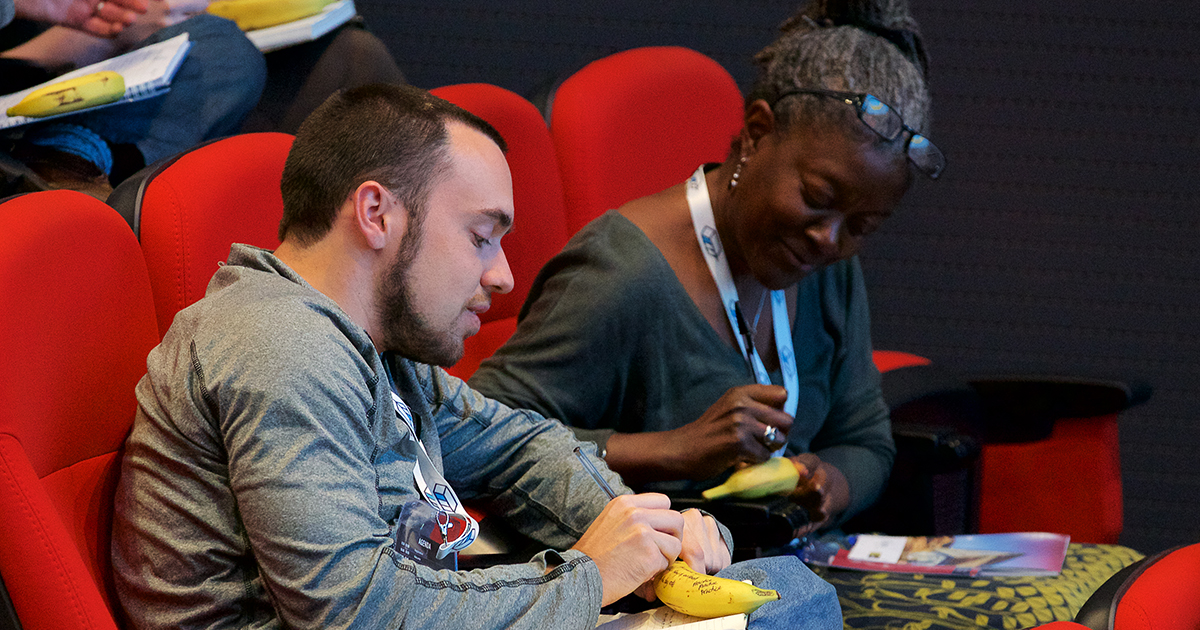
We generally read copy from left to right, and we also scan copy to pick out key words that give us the gist of a sentence or paragraph. See, you’re probably doing it now. And if I were to plant a random word here – bananas – scanning eyes would pick up on this as a key word, and make you think you’ve missed something important that connects this word, so you go back to the last point the copy made sense. Pretty cool, huh?

For copywriters, this is really powerful stuff. If executed well, you can lead readers through a piece of text, exactly as you want it to be read, by using trigger words strategically placed throughout (as if we needed an excuse to get more nerdy and pedantic about copy).

Simply, for something to be easy to read, it needs to make sense and have a logical flow. It sounds obvious, but there’s plenty of copy out there that doesn’t fit this brief, and will most likely confuse its readers early on, and turn them off.

Lesson 3 – Pitching takes practice

As our very own David McGuire said in his opening speech, “copywriters are an introverted lot” (his words, not mine). So naturally, our default comfort zone isn’t pitching or giving a presentation – in fact, I think most of my colleagues would rather chain-write a week’s worth of white papers on hydraulic pumps than put themselves in that situation.

[Hey! There’s nothing wrong with hydraulic pumps. – DM]

Maybe that’s a little harsh, but public speaking doesn’t come natural to us writer-types, and I include myself in that.

But after Sasha Damjanovski’s session Pitch Me Perfect, I’ve realised that pitching and presentations mostly rely on practice. That and a shed-load of preparation beforehand.

Lesson 4 – Never tell your clients what you really think

It may seem obvious, but this is a really important point. Richard Owsley’s whirlwind lightning talk was hilarious and well-pitched in even measure, but had a serious underlying point to make: no matter what the project, the client is always right (even if you think otherwise).

Telling your clients what you really think is never advised – and let’s be honest, they’re paying you to do a good job, so if you’ve failed to meet expectations, you’ve only got yourself to blame.

Of course, you’re never going to simply roll over when a client comes back with a mountain of amends, but if the feedback is along the lines of, “this isn’t what we envisaged at the start”, then this should ring alarm bells for future projects, to make sure expectations on both sides are clearly set out from the start.

Lesson 5 – A healthy appreciation of Viz is a good thing

I joined Radix in 2016, and finally, finally, I’ve got the opportunity to talk about the “popular” cult magazine and all-round hilarious smut-fest, Viz.

(I say “popular” because according to Nick Parker – copywriter, strategist and former Viz writer – it’s had one of the most turbulent circulation records of any magazine going. Its vulgar use of profanity and vulgarity to get laughs could have something to do with this, but for me, that’s a plus.)

Joking aside, Nick made some really important points about copywriting as a whole, and ultimately, how we need to take our responsibilities as copywriters more seriously, i.e. don’t scoff at someone who doesn’t understand what we do, but instead, teach people the true value of great copy – and how there’s so much more to it than just wordsmithing.

Conclusion – sorry, robots: we’ll be in a job for a while yet

As it becomes increasingly challenging for brands to differentiate themselves from the competition, good quality copy is becoming more sought after, and harder to find.

So as long as we keep providing clients with great writing– and are clear about just how much it takes to make that happen – the demand for copywriters won’t be going anywhere soon.

If you’d like to stay updated about how we implement these lessons – or to receive monthly tips on B2B copywriting and content – you can do that here.

Podcast 54: why standout content needs writers *and* experts

Every copywriter knows the feeling of being asked to think up content ideas for clients – and in some cases, developing their whole content strategy. But how much of this planning work should a writer do, who should pay… and, crucially, how much client input do we really need?

Talking to subject matter experts can make the difference between “me too” content and a really standout, original take on a subject. It’s why David rates them among the three people your B2B copywriter definitely needs to meet.

It’s pretty clear that an effective editorial board can transform your content – so why doesn’t this happen as standard? And how can writers and experts work together in a focused way, to get the best results?

In episode 54 of our B2B copywriting podcast, Fiona, David and Emily discuss what it takes to go from good copy to great copy.

Listen now to discover:

  • Why there’s issues around access to subject experts
  • The risks of being cagey with access
  • Standing out from the crowd, and why it’s important
  • How deep insight on a niche topic can make all the difference
  • When copywriters should be relied on for content ideas

How to listen >>

You can download the episode here (right-click and “save-as” to download). Or stream the episode in the player at the top of the page.

(Or you can subscribe to the podcast on iTunes here. Alternatively, add our RSS to your preferred podcast player.)

Credits:

Intro and outro music by Industrial and Marine.

How to become an overnight expert on pretty much anything

Contrary to popular belief, being a B2B technology copywriter isn’t all glamour. Away from the constant accolades, the endless parties and the rapturous attention of an adoring public, your beloved copywriter has a lot to cope with.

When we’re in our enterprise tech comfort zone, life comes easy:

  • A white paper on PaaS integration for data centre managers, you say? No problem!
  • A blog post for HR directors in EMEA on IoT use cases in 5G networks? Piece of cake!
  • A picture book on Lean Startup product development methodologies for under-fives? Hell, yeah!

But when we’re dragged out of that comfort zone by new clients, new tech or new topics, that’s when we have to bring out the big guns.

Here’s a sample of some of the topics I’ve had to learn about from scratch (and fast) for client projects over the last few months:

  • Refined-oil storage facilities
  • 2.5GBASE-T and 5GBASE-T Ethernet standards
  • The global aluminium market
  • Positive pressurisation in electronics enclosures

So how do you get up to speed on seemingly impenetrable topics and quickly turn around an insight-packed, beautifully crafted piece of weapons-grade B2B content? I’m glad you asked…

1: Know what you need to know

First things first: figure out your audience. A decent understanding of the what your readers already know (and what they’ll be thinking about next) will point you in the direction of the stuff you need to know.

As luck would have it, our very own Fiona Campbell-Howes, persona-maven nonpareil, once wrote a rather nifty blog post bursting with red-hot tips on whipping up a quick buyer persona.

Second things second: know your limits. When time is tight, you can’t spend three weeks immersing yourself in every element of the topic – stick to the brief and narrow your research down to:

  • The things you definitely need to know so you don’t come across as a gibbering imbecile when you start writing
  • The things it would be really nice to know so you can sound like you write about this stuff all the time

2: Research fast

Now, I know you’ve all done research before, but this is different. When you’ve only got a couple of hours to find what you need, you have to zero in on the most trusted trade-news sites (the client can point you in the right direction here) and industry analysts for the topic at hand.

It’s important not to fall too far down the rabbit hole, clicking link after link after link in the vain hope of finding a single source of enlightenment. But if you’ve followed step 1 above, you’ll be able to stay focused on finding what you really need.

And remember to keep it current. Set your search parameters so you’re only seeing things from the last 12 months, otherwise you’ll end up quoting crusty old reports predicting trends that have either been and gone or never happened.

One last note on this – don’t panic. You’re not cramming for an exam, you’re trying to find useful knowledge to create a specific piece of content for a specific purpose for a specific audience. Once the client sees the fruits of your labours in the outline, they’ll give you a steer on which points need to be expanded/reconsidered/fired into the Grand Canyon.

3: Phone a friend

When I say “phone”, I mean “bellow across the office at”. And when I say “friend”, I mean “already overstretched co-worker”. But you get the idea.

I’m fortunate that the Radix team is replete with arcane knowledge on areas of technology so obscure that nobody is really sure if they actually exist within the boundaries of space-time. As my colleague George Reith will tell you, for example, “The lore of bit depth quantisation is very deep.”

If you’re not lucky enough to work in an office full of unnervingly geekish folks like George, fear not – I’m willing to bet your social networks are full of people with expertise on all kinds of unlikely topics. So maybe you *could* just phone a friend, after all.

4: Talk to the real experts

This is the bit where you grab your client by the lapels and demand answers.

At the end of the day, when push comes to shove and all’s said and done, the only sure-fire way to get real insight, real fast is to talk to the experts on your client’s team.

The people on the ground who live and breathe this stuff will quickly validate or debunk all that research you just did. And they’ll add unique insights that can enrich your copy and elevate the finished piece into something genuinely valuable for your audience.

Putting copywriters and subject-matter experts together is absolutely critical for creating great B2B content – you neglect it at your peril.

What are you waiting for?

So come on, people! This diem isn’t going to carpe itself – get out there and learn something new.

Or if you’ve got an upcoming campaign on a topic nobody else seems to understand, why not put our skills to the test? Get in touch at [email protected].